Table of Contents
Smart Farming in Africa: Tech-Driven Farming for Food Security
Africa is standing at a critical turning point. With food demand rising faster than farms Smart Farming can produce and millions of new consumers entering the food system every single year — the pressure on agriculture has never been greater. Climate change, unpredictable weather, shrinking arable land, and increasing production costs make traditional farming methods no longer enough. That’s why smart agriculture a modern, technology-powered approach — is emerging as one of Africa’s strongest tools for transforming food production and securing the continent’s future.
What Is Smart Farming?
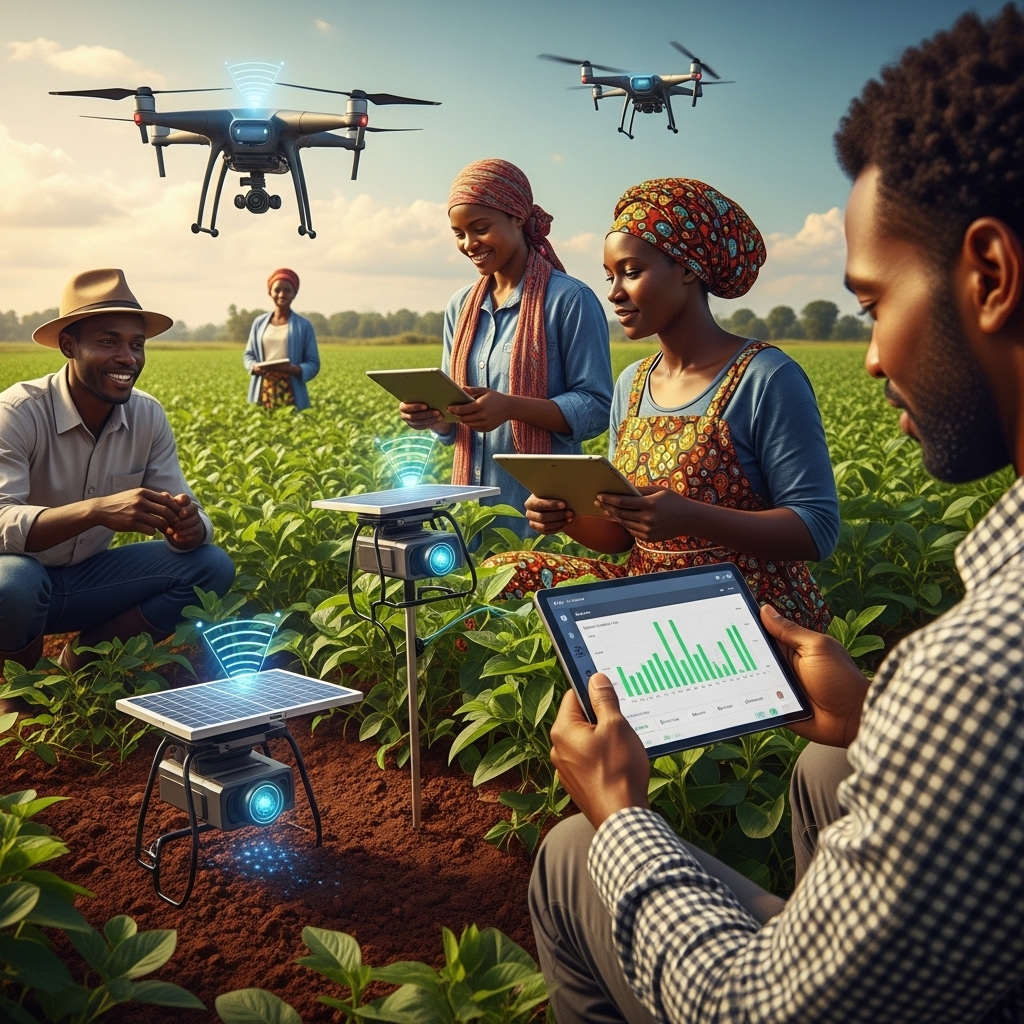
Smart Farming in Africa combines digital tools such as drones, sensors, artificial intelligence, mobile applications, and data analytics to help farmers make better decisions. This approach improves crop monitoring, increases efficiency, reduces waste, and gives farmers real-time insights into weather patterns, soil conditions, pest threats, and market trends.
Imagine a smallholder farmer receiving a phone alert saying: “Rain expected later skip irrigation today.” Or a drone detecting early signs of crop stress before the farmer notices anything on the ground. Smart farming makes this possible, turning ordinary farms into intelligent, data-driven farms that are more productive and more resilient.
How Smart Farming in Africa Helps Strengthen Food Security
Across the continent, Smart Agriculture in Africa is proving to be a powerful tool against long-standing farming challenges. Here’s how it contributes to a stronger and more secure food system:
- Better resource management: Sensors help farmers irrigate only when necessary, saving water and reducing operational costs.
- Higher yields: By tracking soil quality, crop health, and environmental changes, farmers can increase productivity and reduce losses.
- Early warnings: Remote sensing and digital tools detect disease outbreaks, drought risks, and pest problems early, allowing farmers to take action quickly.
- Youth empowerment: Smart agriculture creates new opportunities for young Africans drone pilots, agritech developers, digital advisors, and more.
Success stories are already emerging across the continent. In East Africa, digital platforms provide soil testing and advisory services. In South Africa, farmers use precision irrigation and drone mapping to optimize vineyards and orchards. In West Africa, apps offer real-time weather updates and market prices to guide planting and selling decisions.
How Technology Powers Smart Farming in Africa
Several technologies come together to make Smart Farming in Africa effective:
- Internet of Things (IoT): Soil and crop sensors track moisture, temperature, and nutrient levels, allowing farmers to manage resources with precision.
- Artificial Intelligence: AI analyzes huge amounts of data to recommend planting schedules, detect disease symptoms, estimate yields, and identify the best crop varieties for specific soil types.
- Drones and aerial imaging: Drones equipped with high-resolution cameras scan fields from above, helping farmers detect areas of stress, plan irrigation, and carry out targeted spraying.
- Digital platforms and mobile apps: Smartphones deliver weather forecasts, farming advice, financial services, and market information — even in remote areas.
Challenges Slowing Down Adoption Of Smart Farming in Africa
Despite its potential, Smart Agriculture in Africa still faces barriers:
- Poor internet and mobile network coverage in many rural farming zones
- High cost of modern equipment such as sensors, drones, and automated systems
- Limited digital skills among farmers, especially older generations
- Weak national policies and infrastructure gaps
- Limited access to financing for smallholder farmers
Also Read : https://www.datadriveharvest.com/2025/11/28/ai-driven-smart-irrigation/
What Africa Needs to Scale Smart Agriculture in Africa
Unlocking the full potential of smart agriculture requires collaboration between governments, innovators, investors, and farmers. Key actions include:
- Improving rural connectivity so farmers can access digital tools
- Providing financing solutions such as subsidies, micro-loans, and leasing options
- Offering training, digital skills programs, and practical demonstrations
- Encouraging public–private partnerships to expand access to technology
- Creating supportive policies and national strategies for digital farming
A New Agricultural Vision Smart Agriculture in Africa
Smart agriculture is more than just new gadgets it represents a major shift in how Smart Agriculture in Africa grows food. It brings sustainability, resilience, and innovation into fields that have long depended on unpredictable climate and manual labor. With the right investments and training, farmers can achieve higher yields, reduce risks, and increase profitability.
This new approach also attracts young people, turning agriculture into an exciting, tech-driven industry full of opportunity. As these technologies spread across the continent, Africa can build a more secure and productive agricultural future.
Smart tools, smart decisions, and smart farming this is the future. And it begins with embracing innovation and letting data drive the harvest.
Also Read: https://chat.whatsapp.com/HT6ebp6IWfcKsT9nwXhkXn?mode=hqrt2