7 Powerful Ways Artificial Intelligence Is Transforming Soil Conservation in Southern Africa

Table of Contents
Artificial Intelligence in Soil Conservation in Southern Africa
Soil conservation is a critical issue in Southern Africa, where agriculture supports livelihoods across countries such as Zimbabwe, Zambia, Malawi, Mozambique, Botswana, Namibia, and South Africa. The region faces recurring droughts, erratic rainfall, land degradation, and increasing pressure on arable land. Unsustainable farming practices, deforestation, and overgrazing have accelerated soil erosion and nutrient depletion. Artificial intelligence in soil conservation is emerging as a valuable tool to help farmers and land managers protect soil health while adapting to climate change.
Artificial Intelligence in Soil Health and Food Security in the Region
Artificial Intelligence can help in protecting and enhancing Healthy soil underpins food security in Southern Africa, where staple crops such as maize, sorghum, millet, groundnuts, beans, and cassava dominate smallholder farming systems. Poor soil fertility and erosion have contributed to declining yields and increased vulnerability to climate shocks. AI in agriculture supports better soil management by providing timely insights into soil conditions, enabling farmers to improve productivity while preserving long-term soil health.
Understanding Artificial Intelligence in soil conservations Southern African Agriculture
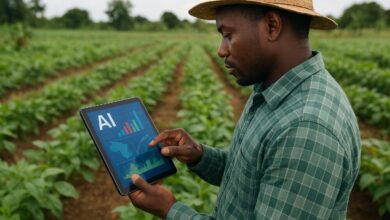
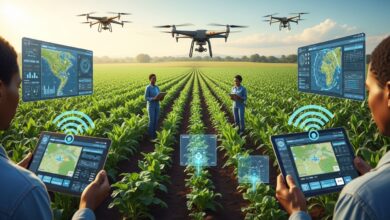
Artificial intelligence refers to digital systems that analyze data, learn patterns, and support decision-making. In Southern Africa, AI tools in soil conservation often rely on satellite imagery, weather data, mobile platforms, drones, and affordable soil sensors. These technologies help analyze soil moisture, nutrient levels, land cover, and rainfall trends. By transforming complex data into practical recommendations, AI makes advanced soil knowledge accessible to farmers, extension officers, and policymakers.
AI-Based Soil Monitoring for Smallholder Farmers
One of the most impactful uses of artificial intelligence in Southern Africa is soil health monitoring. Traditional soil testing services are often costly or unavailable in rural areas. AI-powered systems allow continuous monitoring of soil moisture, fertility, and structure using remote sensing and sensor data. Farmers can identify early signs of soil degradation, nutrient loss, or moisture stress and respond quickly through improved farming practices.
Artificial Intelligence in Predicting Soil Erosion and Climate Risks
Southern Africa experiences intense rainfall events followed by prolonged dry spells, increasing the risk of soil erosion and land degradation. AI models analyze topography, rainfall intensity, vegetation cover, and land-use history to predict erosion-prone areas. These insights help farmers implement conservation measures such as contour farming, mulching, conservation tillage, and agroforestry. Early prediction reduces soil loss and improves climate resilience at the farm level.
Precision Soil Management for Climate-Smart Farming
Artificial intelligence supports precision agriculture practices suited to Southern African conditions. AI-driven decision support systems recommend optimal fertilizer application rates, planting times, irrigation schedules, and tillage methods based on local soil data. This targeted approach reduces input costs, improves nutrient use efficiency, and minimizes environmental impact. Precision soil management helps farmers maximize yields while conserving scarce water and soil resources.
Also Read : https://www.datadriveharvest.com/2025/12/24/artificial-intelligence-3/
Supporting Regional Policy and Land Management
Artificial Intelligence also strengthens soil conservation efforts at regional and national levels. Governments, research institutions, and development agencies use AI platforms to monitor soil health trends, assess land degradation, and guide land restoration programs. These tools support evidence-based agricultural policies, sustainable land management strategies, and climate adaptation initiatives aligned with regional development goals.
Challenges to AI Adoption in Southern Africa
Despite its potential, the adoption of artificial intelligence in soil conservation faces challenges across Southern Africa. Limited digital infrastructure, high technology costs, low digital literacy, and restricted access to reliable data remain barriers. Addressing these challenges requires investment in rural connectivity, farmer training, affordable AI solutions, and strong partnerships between governments, universities, and agritech startups.
The Future of AI-Driven Soil Conservation in Southern Africa
The future of agriculture in Southern Africa depends on resilient and sustainable soil systems. Artificial intelligence does not replace traditional knowledge or conservation farming practices but enhances them through precision and predictive insight. By integrating local expertise with intelligent technologies, Southern Africa can strengthen food security, improve farmer livelihoods, and protect soil resources for future generations.
Also Read : https://chat.whatsapp.com/HT6ebp6IWfcKsT9nwXhkXn?mode=hqrt2