Powerful Breakthrough: Crop Yield Prediction Using Machine Learning Is Transforming Modern Agriculture 2026

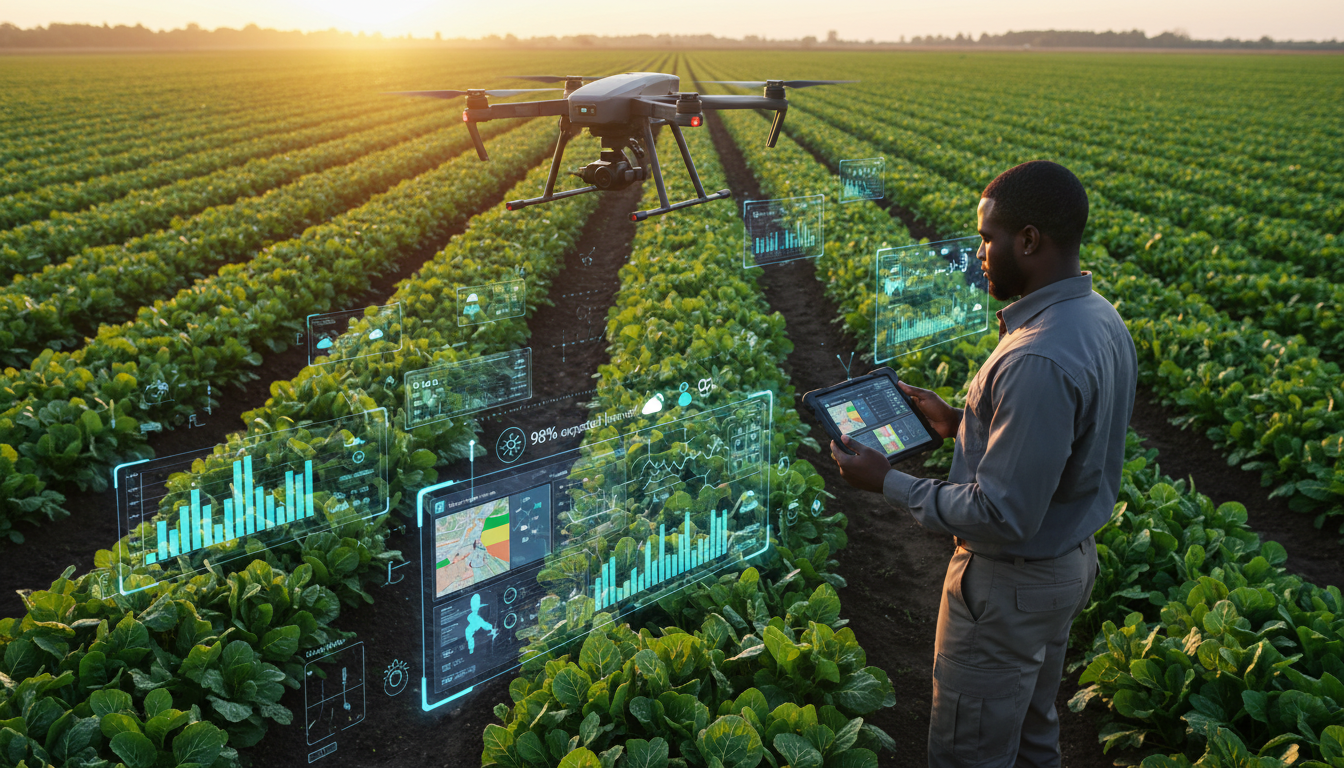
Table of Contents
Introduction to Crop Yield Prediction Using Machine Learning
Crop yield prediction using machine learning is rapidly transforming modern agriculture as farmers face increasing climate uncertainty, rising input costs, and growing global food demand. Traditional forecasting methods are no longer enough in a world where rainfall patterns shift unexpectedly and temperature extremes affect crop performance. It provides a smarter, data-driven solution that helps farmers and policymakers make better decisions with greater confidence.
𝐀𝐥𝐬𝐨 𝐑𝐞𝐚𝐝 : https://www.datadriveharvest.com/2026/02/20/agribusiness-sector-trends-in-africa/
Why Crop Yield Prediction Using Machine Learning Matters for Food Security
Accurate prediction is essential because agricultural productivity influences food prices, farmer incomes, supply chains, and national food security strategies. When crop output is miscalculated, the consequences can be severe. Overestimation can flood markets and reduce farmer profits, while underestimation can lead to shortages and price spikes. It reduces the risks by delivering more precise and adaptive forecasts.
How Crop Yield Prediction Using Machine Learning Analyzes Agricultural Data
The reason it is so powerful lies in its ability to analyze large and complex datasets. Agricultural production depends on multiple interconnected factors such as rainfall, temperature, soil health, fertilizer use, irrigation timing, seed variety, and pest conditions. It evaluates these variables simultaneously, identifying patterns that traditional statistical methods often miss.
𝐉𝐨𝐢𝐧 𝐎𝐮𝐫 𝐰𝐡𝐚𝐭𝐬𝐚𝐩𝐩 𝐠𝐫𝐨𝐮𝐩 𝐟𝐨𝐫 𝐦𝐨𝐫𝐞 𝐮𝐩𝐝𝐚𝐭𝐞𝐬 : https://chat.whatsapp.com/HT6ebp6IWfcKsT9nwXhkXn?mode=hqrt2
From Historical Averages to Adaptive Intelligence
Unlike older forecasting systems that rely heavily on historical averages, crop yield prediction using machine learning adapts continuously as new data becomes available. Agriculture today does not behave exactly as it did ten or twenty years ago. Climate change, improved seed technologies, and evolving farming practices all influence productivity. Crop yield prediction using machine learning adjusts to these changes, making forecasts more responsive to real-world conditions.
Capturing Complex Environmental Relationships
One major ability to capture nonlinear relationships. For example, moderate rainfall may increase yields under certain temperature conditions but decrease yields when combined with excessive humidity or poor soil drainage. Crop yield prediction using machine learning identifies these complex interactions, allowing for more realistic yield expectations compared to simplified linear models.
Practical Benefits of Crop Yield Prediction Using Machine Learning for Farmers
For farmers, it offers early insights before harvest. If the model forecasts lower-than-expected output, farmers can adjust fertilizer application, irrigation schedules, or pest management strategies to improve results. In cases where high yields are predicted, farmers can prepare for storage, transportation, and marketing opportunities. Crop yield prediction using machine learning therefore supports proactive farm management rather than reactive decision-making.
How Agribusiness and Governments Benefit
Agribusinesses also benefit from crop protection to yield it enhances supply chain planning. Accurate forecasts allow companies to optimize storage facilities, coordinate logistics, and stabilize contracts with buyers. Governments can use these predictive methods to strengthen food security planning, anticipate potential shortages, and design timely policy responses. This predictive capability is especially important in regions vulnerable to drought or extreme weather.
𝐀𝐥𝐬𝐨 𝐑𝐞𝐚𝐝 : https://www.datadriveharvest.com/2026/02/20/agribusiness-sector-trends-in-africa/
Challenges Facing Crop Yield Prediction Using Machine Learning
Despite its promise, it still faces challenges. Reliable data collection remains a critical issue in many rural areas where weather stations, soil sensors, and digital record systems are limited. Without high-quality inputs, Machine learning cannot reach its full potential. Investment in digital infrastructure and data systems will be necessary to scale these solutions effectively.
Building Trust and Transparency in AI Agriculture
Another challenge is it involves transparency and trust. Some advanced models operate as complex systems that are difficult to interpret. Farmers and policymakers may hesitate to rely fully on predictions they do not understand. Improving explainability and communicating how crop yield prediction using machine learning works will be essential for widespread adoption.
The Future of Crop Yield Prediction Using Machine Learning
Looking ahead, the future of Agriculture is closely tied to advancements in satellite monitoring, remote sensing, and Internet of Things technologies. As more real-time agricultural data becomes available, crop yield prediction using machine learning will become even more precise. Farmers may soon receive continuous updates through mobile platforms, allowing them to refine decisions throughout the growing season.
Conclusion: A Data-Driven Agricultural Revolution
Ultimately, it represents a major shift toward data-driven agriculture. By combining environmental data, historical performance, and advanced algorithms, strengthens resilience in the face of climate volatility. As global food demand rises, integrating crop yield prediction using machine learning into everyday farming practices will be key to building sustainable and efficient food systems.
𝐀𝐥𝐬𝐨 𝐑𝐞𝐚𝐝 : https://www.datadriveharvest.com/2026/02/17/artificial-intelligence-4/