Table of Contents
Introduction to Best AI Tools for Farmers
Agriculture is entering a new era where technology is becoming just as important as traditional farming knowledge. The best AI tools for farmers are helping producers make smarter decisions, increase productivity, and reduce costs across many farming operations. Artificial intelligence allows farmers to analyze data, predict outcomes, and manage crops and livestock more efficiently than ever before.
The best AI tools for farmers are designed to simplify complex farming tasks by turning large amounts of agricultural data into practical insights. From monitoring soil health to predicting weather patterns and detecting crop diseases, these technologies are changing how farmers manage their land and resources.
As global food demand continues to grow, farmers need smarter ways to increase productivity while protecting the environment. The best AI tools for farmers offer solutions that help achieve higher yields, improve sustainability, and optimize farm management. For both smallholder farmers and large commercial farms, artificial intelligence is becoming a powerful partner in modern agriculture.
𝐀𝐥𝐬𝐨 𝐑𝐞𝐚𝐝 : https://www.datadriveharvest.com/2026/02/23/erp-software-for-agriculture-in-southern-africa/
How Artificial Intelligence Is Transforming Farming
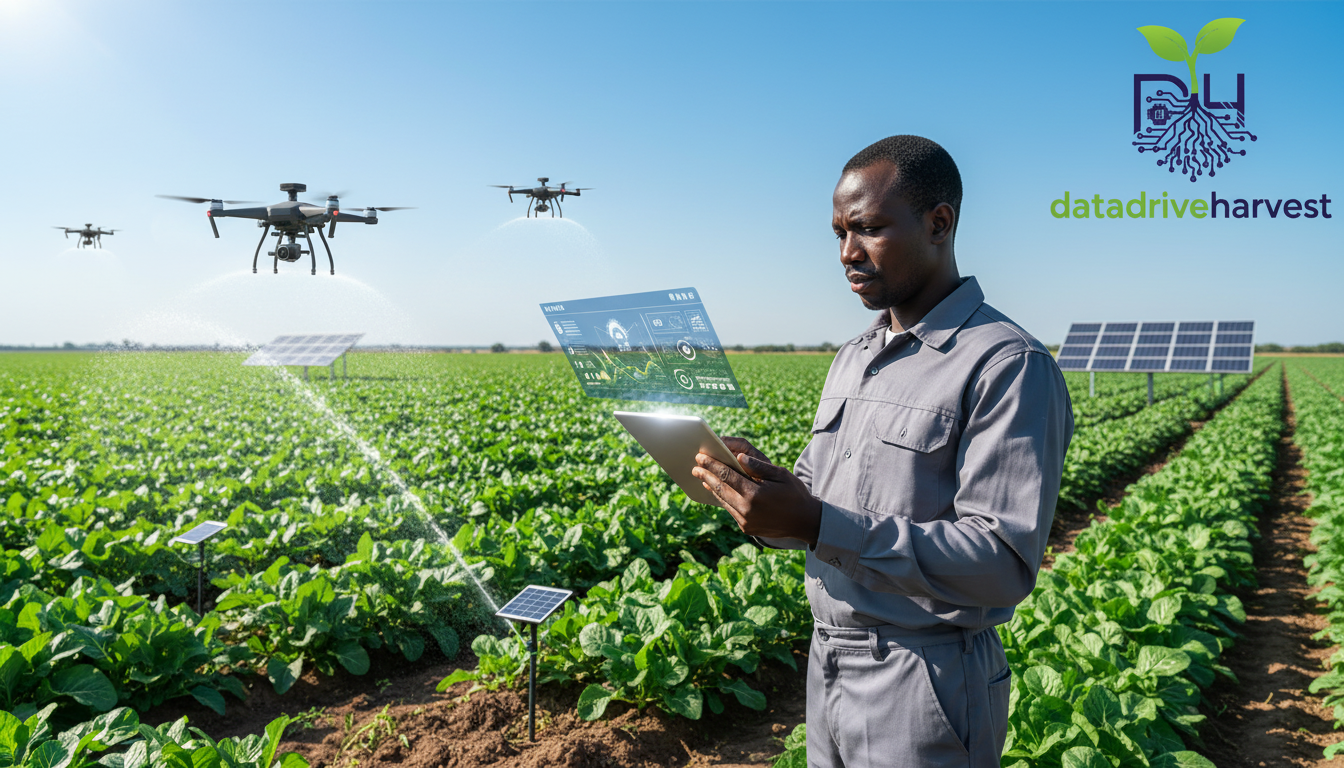
The best AI tools for farmers rely on machine learning, sensors, satellite imagery, and data analytics to provide insights that were previously difficult to obtain. These tools collect information from multiple sources such as soil sensors, weather stations, drones, and satellite systems to give farmers real-time updates about their fields.
Using the best AI tools for farmers allows producers to detect crop stress earlier, monitor soil moisture levels, and track plant growth throughout the season. This technology helps farmers identify problems before they spread across entire fields, saving both time and resources.
Another major advantage of the best AI tools for farmers is predictive analytics. By analyzing historical and current data, AI systems can forecast potential outcomes such as crop yields, pest outbreaks, and weather changes. Farmers can then adjust their strategies to reduce risks and improve production results.
The integration of artificial intelligence into agriculture is also helping farmers move toward precision farming. Instead of treating entire fields the same way, farmers can apply water, fertilizer, and pesticides only where needed. This targeted approach improves efficiency and reduces environmental impact.
AI Farm Management Platforms
One of the most valuable categories within the best AI tools for farmers is farm management software. These platforms help farmers organize and analyze farm data to improve decision-making and streamline operations.
Farm management systems allow farmers to track crop growth, manage equipment, monitor weather conditions, and plan agricultural activities in one central platform. By using the best AI tools for farmers, producers can easily access insights that guide planting schedules, irrigation plans, and fertilizer applications.
Many modern farm management platforms also include mobile applications that farmers can use directly from the field. With these tools, farmers receive real-time notifications about changes in soil conditions, pest risks, or weather forecasts. This instant access to information helps farmers respond quickly to challenges that could affect crop production.
The best AI tools for farmers also help with long-term planning by analyzing past performance data. Farmers can compare previous harvests, identify trends, and improve their strategies for future seasons.
𝐀𝐥𝐬𝐨 𝐑𝐞𝐚𝐝 : https://www.datadriveharvest.com/2026/02/23/ai-tools-in-agriculture-2026/
AI Crop Monitoring Tools
Crop monitoring is one of the most important applications of artificial intelligence in agriculture. The best AI tools for farmers use satellite images, drone technology, and computer vision to monitor crops throughout the growing season.
These systems analyze plant health by studying factors such as leaf color, plant growth patterns, and soil moisture levels. By using the best AI tools for farmers, producers can identify early signs of crop stress caused by pests, diseases, or nutrient deficiencies.
Drone-based crop monitoring tools are particularly effective because they capture high-resolution images of farmland. AI algorithms then analyze these images to detect areas that need attention. Farmers can quickly focus their efforts on affected sections of the field instead of inspecting the entire farm manually.
Satellite-based monitoring tools also provide valuable insights for large farms. With the best AI tools for farmers, satellite imagery can track crop development across thousands of hectares, helping farmers manage large agricultural operations efficiently.
AI Irrigation Management Systems
Water management is another area where artificial intelligence is making a significant difference. The best AI tools for farmers include smart irrigation systems that automatically adjust water usage based on weather conditions, soil moisture levels, and crop needs.
Traditional irrigation methods often waste water because they apply the same amount across entire fields. However, the best AI tools for farmers analyze environmental data to determine exactly how much water each section of the farm requires.
These systems use sensors placed in the soil to monitor moisture levels and communicate with irrigation systems. When the soil becomes too dry, the AI platform activates irrigation. When enough moisture is present, watering stops automatically.
By using the best AI tools for farmers, producers can significantly reduce water consumption while ensuring crops receive the right amount of moisture for healthy growth. This technology is especially valuable in regions facing water shortages or unpredictable rainfall patterns.
AI Pest and Disease Detection Tools
Crop pests and diseases are among the biggest challenges farmers face each year. The best AI tools for farmers help detect these problems earlier by analyzing images of plants and identifying symptoms that may not be visible to the human eye.
Using smartphone cameras, drones, or specialized sensors, farmers can capture images of crops and upload them to AI systems. The best AI tools for farmers then analyze these images and provide recommendations on how to manage the issue.
Early detection is crucial because it allows farmers to treat affected plants before the problem spreads across the entire field. This reduces crop losses and minimizes the need for excessive pesticide use.
Some AI platforms also provide detailed insights about pest life cycles and environmental conditions that encourage infestations. By using the best AI tools for farmers, producers can take preventive measures to protect crops and maintain healthy fields.
AI Tools for Livestock Monitoring
Artificial intelligence is not limited to crop production. The best AI tools for farmers are also improving livestock management by helping farmers monitor animal health and behavior more effectively.
AI-powered sensors and wearable devices can track the movement, feeding habits, and body temperature of livestock. These systems alert farmers if animals show signs of illness or stress.
For dairy farmers, the best AI tools for farmers can monitor milk production patterns and detect changes that may indicate health problems. Early detection allows farmers to provide timely care and maintain productivity.
Livestock monitoring tools also improve farm efficiency by helping farmers track breeding cycles and optimize feeding strategies. This leads to healthier animals and higher overall farm productivity.
Benefits of Using AI Tools in Agriculture
The adoption of the best AI tools for farmers brings several important benefits that help modern farms operate more efficiently.
First, artificial intelligence improves decision-making by providing accurate data and predictive insights. Farmers no longer have to rely solely on experience or guesswork when planning their operations.
Second, the best AI tools for farmers increase productivity by helping farmers optimize planting schedules, irrigation, fertilization, and pest management strategies. This leads to higher crop yields and better resource utilization.
Another major benefit is cost reduction. By applying inputs such as water, fertilizer, and pesticides more precisely, farmers can lower production costs while maintaining high output levels.
Environmental sustainability is also improved with the best AI tools for farmers. Precision agriculture practices reduce chemical usage and minimize environmental damage while maintaining soil health.
𝐉𝐨𝐢𝐧 𝐎𝐮𝐫 𝐖𝐡𝐚𝐭𝐬𝐀𝐩𝐩 𝐆𝐫𝐨𝐮𝐩 𝐟𝐨𝐫 𝐌𝐨𝐫𝐞 𝐔𝐩𝐝𝐚𝐭𝐞𝐬 : https://whatsapp.com/channel/0029VbC7SzF1NCrTQdDe3B05
Challenges Farmers May Face When Adopting AI
Although the best AI tools for farmers offer many advantages, adopting these technologies can present certain challenges. One of the main barriers is the cost of implementing advanced technologies such as drones, sensors, and farm management platforms.
Another challenge is digital literacy. Some farmers may require training to effectively use the best AI tools for farmers and interpret the data generated by these systems.
Connectivity can also be a limitation in rural areas where internet access is limited. Since many AI platforms rely on cloud-based systems, stable connectivity is important for optimal performance.
However, as technology continues to evolve, these challenges are gradually being addressed through more affordable solutions and improved infrastructure.
The Future of AI in Agriculture
The future of agriculture will be heavily influenced by technological innovation, and the best AI tools for farmers will play a major role in shaping that future. As artificial intelligence becomes more advanced, new tools will continue to emerge that help farmers manage their operations with greater precision and efficiency.
Future AI systems may integrate robotics, autonomous tractors, and fully automated farming operations. These technologies will allow farmers to manage larger farms while reducing labor demands.
The best AI tools for farmers will also continue to improve sustainability by helping farmers adapt to climate change, conserve natural resources, and produce food more efficiently.
For farmers who embrace these technologies early, artificial intelligence offers an opportunity to remain competitive in an increasingly technology-driven agricultural industry.
𝐀𝐥𝐬𝐨 𝐑𝐞𝐚𝐝 : https://www.datadriveharvest.com/2025/12/14/ai-driven-regenerative-farming/
Conclusion
The best AI tools for farmers are transforming agriculture by providing powerful solutions for crop monitoring, irrigation management, pest detection, and livestock monitoring. These technologies help farmers increase productivity, reduce costs, and make better decisions based on accurate data.
As agriculture continues to evolve, the best AI tools for farmers will become essential tools for modern farming. By integrating artificial intelligence into everyday farm operations, farmers can build more efficient, sustainable, and profitable agricultural systems.
For farmers looking to improve their productivity and adapt to the future of farming, adopting the best AI tools for farmers is no longer just an option—it is becoming a necessity in the rapidly changing world of agriculture.