Powerful Breakthrough: Sensors in Agriculture Transforming Farms with Smart Farming Sensors 2026.


Table of Contents
Introduction
Sensors in agriculture are rapidly changing how farmers grow food and manage their farms. Today, sensors in agriculture help farmers collect real-time data about soil, crops, weather, and livestock. This valuable information allows farmers to make better decisions that improve productivity and reduce waste. Across the world, smart farming sensors are becoming essential tools for modern agriculture. In Africa, where climate change and unpredictable weather often affect farming, sensors in agriculture are helping farmers monitor their fields more accurately and improve harvest outcomes.
How Sensors in Agriculture Help Farmers Monitor Crops
Sensors play a critical role in helping farmers monitor crop health and growth. Traditionally, farmers had to walk through fields to check whether crops were healthy or stressed. While experience remains important, sensors in agriculture now provide more accurate and faster insights.
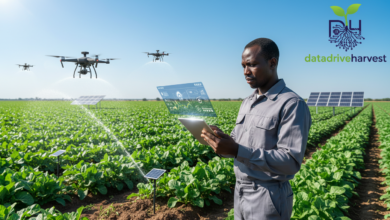
Smart farming sensors can measure soil moisture, temperature, humidity, and nutrient levels. These sensors are placed directly in the soil or attached to farming equipment. The data collected by sensors in agriculture is sent to mobile apps or farm management platforms where farmers can easily view it.
For example, if soil moisture levels drop below a healthy level, sensors immediately alert farmers. This allows them to irrigate crops at the right time. Without sensors, farmers may overwater or underwater crops, which can reduce yields. By using sensors in agriculture, farmers can maintain optimal growing conditions and improve crop performance.
Across parts of South Africa and Kenya, farmers are already using smart farming sensors to monitor maize, wheat, and vegetable crops. This technology helps them protect their crops from drought stress and improve productivity.
𝐀𝐥𝐬𝐨 𝐑𝐞𝐚𝐝 : https://www.datadriveharvest.com/2025/12/31/ai-is-transforming-the-agricultural-ecosystem/
Sensors in Agriculture Improve Water Management
Water is one of the most important resources in farming. However, many farmers struggle to use water efficiently. They help solve this problem by providing accurate soil moisture data that guides irrigation decisions.
Smart farming sensors placed in the soil measure how much water is available to plant roots. When soil moisture drops to a certain level, sensors in agriculture send alerts that irrigation is needed. When enough water has been applied, the system can stop irrigation automatically.
This precise water management helps farmers avoid wasting water. In regions facing drought or water shortages, sensors in agriculture can make a major difference in protecting crops and conserving water.
For example, farmers using smart irrigation systems powered by sensors can reduce water use by up to 30 percent while still maintaining healthy crops. This technology not only saves water but also lowers energy costs related to irrigation systems.
In African countries where water scarcity is becoming more common, they offer a sustainable solution that supports climate-smart farming.
Sensors in Agriculture Strengthen Climate Resilience
Climate change is creating new challenges for farmers around the world. Rising temperatures, irregular rainfall, and extreme weather events can damage crops and reduce harvests. These sensors help farmers adapt to these challenges by providing real-time environmental data.
Weather monitoring sensors placed on farms track temperature, rainfall, humidity, and wind patterns. This information allows farmers to understand how weather conditions affect crop growth. When combined with digital farming platforms, sensors in agriculture help farmers plan planting schedules and protect crops during extreme weather conditions.
For example, if sensors detect sudden temperature drops, farmers can take steps to protect sensitive crops. If sensors detect high humidity levels that may encourage crop diseases, farmers can respond quickly with preventive treatments.
In many African regions where farmers rely heavily on rainfall, sensors in agriculture help predict weather patterns more accurately. This information allows farmers to adjust planting times and reduce climate-related risks.
𝐉𝐨𝐢𝐧 𝐎𝐮𝐫 𝐖𝐡𝐚𝐭𝐬𝐀𝐩𝐩 𝐆𝐫𝐨𝐮𝐩 𝐟𝐨𝐫 𝐦𝐨𝐫𝐞 𝐔𝐩𝐝𝐚𝐭𝐞𝐬 : https://chat.whatsapp.com/HT6ebp6IWfcKsT9nwXhkXn?mode=hqrt2
Sensors in Agriculture Support Precision Farming
Precision farming is one of the most important trends in modern agriculture. These sensors are key tools that make precision farming possible. Precision farming means using data to manage farms more efficiently instead of applying the same treatment across entire fields.
Smart farming sensors collect data from different parts of a field, revealing variations in soil fertility, moisture levels, and crop health. With this information, farmers can apply fertilizers, water, or pesticides only where they are needed.
This targeted approach reduces input costs and protects the environment. Instead of overusing chemicals, sensors help farmers apply resources carefully and efficiently.
Precision farming supported by sensors in agriculture can increase yields while lowering operational costs. Farmers benefit from higher productivity and healthier soils.
Agritech companies are developing affordable sensor technologies that can work with smartphones, making sensors in agriculture accessible even for smallholder farmers in rural communities.
Sensors in Agriculture Improve Livestock Management
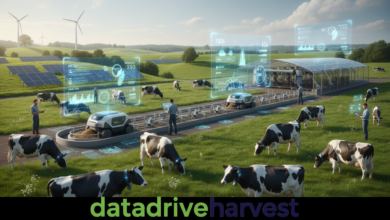
These sensors are not only useful for crops; they also help farmers manage livestock more effectively. Smart farming sensors can be attached to animals using collars, ear tags, or wearable devices.
These sensors track animal health, movement, feeding patterns, and body temperature. If a cow shows signs of illness or unusual behavior, sensors send alerts to farmers or veterinarians.
This early detection helps farmers treat diseases before they spread to other animals. Sensors in agriculture also help monitor breeding cycles and milk production in dairy farms.
In countries where livestock farming is a major source of income, such as Kenya, Ethiopia, and Zimbabwe, smart farming sensors are helping farmers maintain healthier herds and improve productivity.
By using sensors , livestock farmers can reduce losses, improve animal welfare, and increase overall farm efficiency.
𝐀𝐥𝐬𝐨 𝐑𝐞𝐚𝐝 : https://www.datadriveharvest.com/2025/12/02/ai-in-smart-agriculture/
The Future of Sensors in Agriculture
The future of sensors looks extremely promising as digital agriculture continues to grow. Advances in technology are making smart farming sensors more affordable, durable, and easy to use.
Many modern sensors now connect to cloud-based platforms that analyze farm data automatically. Artificial intelligence tools can interpret sensor data and provide recommendations to farmers.
In the future, sensors in agriculture may be combined with drones, satellite imagery, and robotic farming equipment. This integrated approach will create highly efficient farming systems that require fewer resources while producing more food.
For Africa, the expansion of sensors in agriculture could play a key role in solving food security challenges. With better access to agricultural data, farmers can increase productivity and reduce the risks caused by climate change.
Governments, research institutions, and agritech startups are investing in digital agriculture solutions that include sensors . These efforts will help farmers adopt modern technologies and strengthen rural economies.
Conclusion
Sensors are transforming the way farmers manage crops, water, and livestock. By collecting real-time data from fields and farms, sensors in agriculture help farmers make smarter decisions that increase productivity and reduce waste. From improving irrigation systems to supporting precision farming and livestock management, smart farming sensors are becoming essential tools for modern agriculture.
For African farmers, these sensors offer a powerful opportunity to overcome climate challenges and improve food production. As digital agriculture continues to expand, sensors in agriculture will play a vital role in building more sustainable and resilient farming systems that support global food security.