Slash Costs and Boost Yields: The Ultimate Guide to Variable Rate Application Technology 2026.

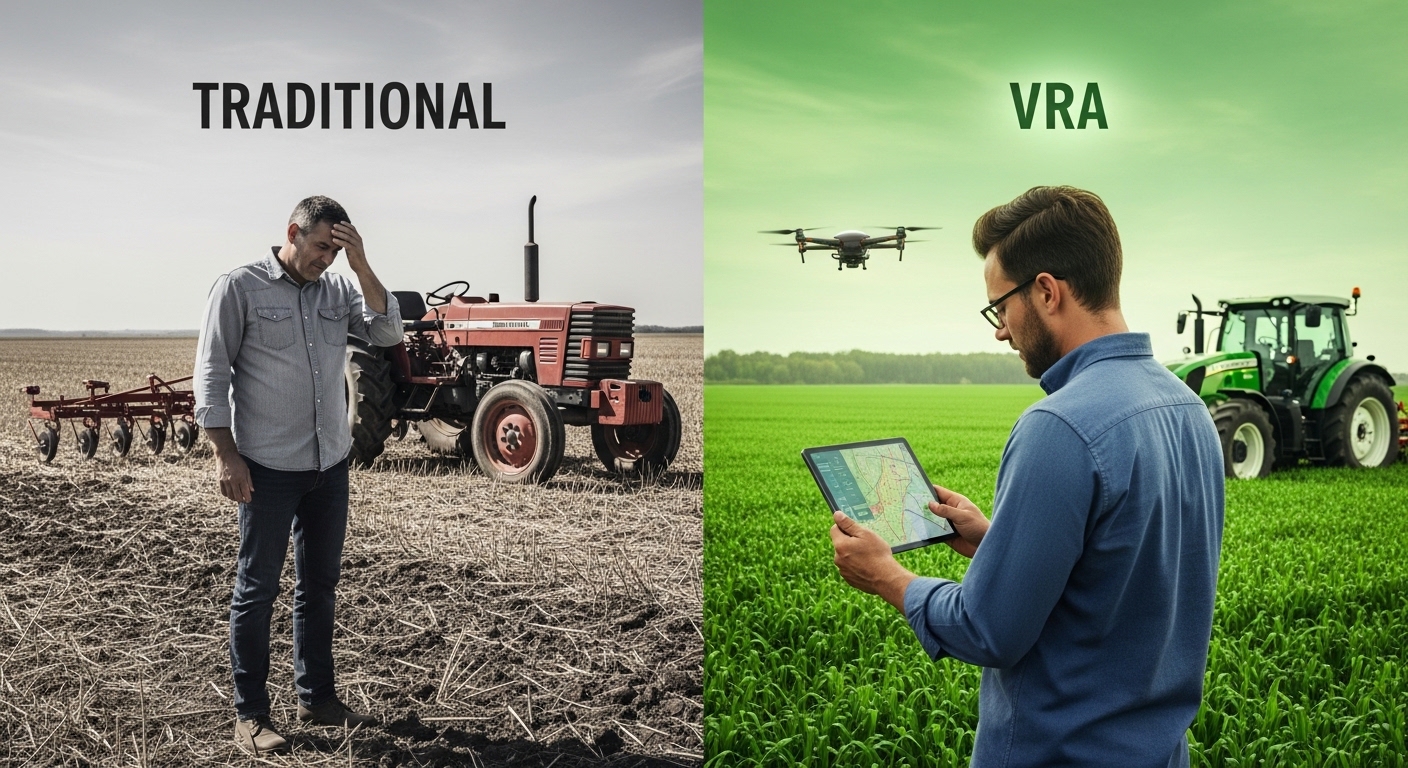
Table of Contents
Mastering Variable Rate Application Technology.
In the modern era of agriculture, farmers are no longer just tillers of the soil; they are data scientists, analysts, and technologists. The shift from traditional, uniform farming to precision agriculture is revolutionizing the industry, and at the heart of this transformation lies variable rate application technology.
If you are a grower, an agronomist, or an agri-business professional looking to optimize crop yields, reduce waste, and boost sustainability, understanding variable rate application is no longer optional—it is essential. This comprehensive guide will walk you through everything you need to know about variable rate technology, how it works, its benefits, and how to implement it on your farm.
What is Variable Rate Application?
Variable rate application, often referred to as (VRT), is a precision farming technique that enables farmers to apply inputs—such as fertilizers, seeds, pesticides, and herbicides—at variable rates across a field. Instead of treating an entire field uniformly, variable rate application allows for the application of specific amounts of products to specific areas based on the unique needs of that zone.
Think of it this way: traditional farming is like painting an entire wall with one roller, regardless of cracks or imperfections. Variable rate application is like using an airbrush to precisely treat each section, ensuring every inch gets exactly what it needs.
Variable rate application relies on a synergy of advanced technologies, including:
- Global Positioning Systems (GPS) and Geographic Information Systems (GIS) for accurate field mapping.
- Remote sensing via satellites or drones to gather real-time crop data.
- Soil sampling and yield monitors to create historical performance maps.
- On-board sensors on tractors and sprayers that detect plant health instantaneously.
- Artificial Intelligence (AI) and machine learning algorithms that process data to make split-second decisions.
By utilizing these tools, variable rate application creates a “prescription map” that guides farm machinery to deliver the right input, in the right place, at the right time, and in the right amount.
How VRA Technology Works: A Step-by-Step Guide
Implementing variable rate application involves a structured workflow that transforms raw data into actionable field operations. Here is a detailed breakdown of the process, using the example of fertilizer application, one of the most common uses of variable rate technology.
1. Defining Management Zones (Zoning)
The foundation of any variable rate application strategy is zoning. A field is rarely uniform; it contains variability in soil type, slope, organic matter, and nutrient levels. The first step is to divide the field into distinct management zones.
- How it works: Using historical yield data, satellite imagery (like NDVI maps), and soil conductivity scans, the field is segmented into zones. For example, a low-lying area with high moisture and organic matter might be Zone A, while a sandy hilltop prone to dryness is Zone B.
- Why it matters: Applying the same amount of fertilizer to both zones would either starve the sandy area or over-saturate the low-lying area. Zoning ensures that the variable rate application system knows exactly where to alter application rates. GeoPard’s “Zones creator” and “Multi-layer analytics” are specifically designed to streamline this complex process.
𝐀𝐥𝐬𝐨 𝐑𝐞𝐚𝐝 : https://www.datadriveharvest.com/2026/03/04/data/
2. Map-Driven vs. Sensor-Driven VRA
Once the zones are defined, you must choose how the variable rate application system will determine the application rates. There are two primary methodologies:
- Map-Based (Prescriptive) VRA: This method relies on pre-generated prescription maps.
- Process: Before heading to the field, you create a digital map that tells the machinery exactly how much product to apply in each specific zone. The map is uploaded to the tractor’s or sprayer’s console.
- Best for: Applying inputs based on stable, long-term field characteristics like soil type, historical pH levels, or pre-season soil test results. This form of variable rate application is ideal for planned, strategic input management.
- Sensor-Based (Reactive) VRA: This method uses real-time sensors mounted on the equipment.
- Process: As the machine moves across the field, optical sensors scan the crop canopy. If a sensor detects a patch of crop that is nitrogen-deficient (lighter green color), it instantly signals the applicator to increase the nitrogen flow rate in that exact spot.
- Best for: Responding to dynamic, in-season conditions like variable nitrogen needs, weed pressure, or pest outbreaks. This type of variable rate application requires no pre-made map, as the data collection and application happen simultaneously.
3. Data Collection and Imagery
The accuracy of variable rate application depends entirely on the quality of the data feeding it. Whether you are using map-based or sensor-based systems, the data sources must be precise.
- Satellite Imagery: Ideal for creating large-scale vegetation indices (like NDVI and NDRE) to assess crop health variability across entire fields over time. This data is crucial for effective VRA planning.
- Drone (UAV) Imagery: Offers ultra-high resolution and the ability to fly on-demand, capturing detailed images of problem areas, weed hotspots, or disease outbreaks. Drones have become an indispensable tool for modern variable rate application strategies.
- Soil Sensors: Measure real-time moisture, temperature, and nutrient levels, providing the ground-truth data needed for precise variable rate application.
- Topographical Data: Understanding elevation changes is crucial, as water and nutrients flow downhill, creating natural variability that variable rate application must account for.
4. Application and Analysis
With the management zones defined and the data integrated, the variable rate equipment executes the task. After application, the cycle continues. The as-applied data is logged, creating a new layer of information that can be analyzed to refine next year’s prescription maps, closing the loop in a continuous improvement cycle for your variable rate application program.
Other Key Applications of VRA Technology
While fertilizer optimization is a primary driver for VRA adoption, the technology’s versatility extends to nearly every input on the farm:
- Variable Rate Seeding: Different parts of a field have different yield potentials. Instead of planting the entire field at one seed population, variable rate application allows you to plant higher populations in high-yielding areas (good soil, flat ground) and lower populations in marginal areas (sandy spots, clay knolls). This variable rate application of seeds maximizes seed investment and optimizes plant spacing for uniform emergence.
- Variable Rate Crop Protection (Pesticides/Herbicides): Perhaps the most environmentally impactful use of variable rate application is in spraying. By using weed maps created from drone or satellite imagery, sprayers can be programmed to only activate when they pass over a weed patch. This “spot spraying” or “see-and-spray” technology is a form of variable rate application that can reduce herbicide use by 70-90%, dramatically cutting costs and chemical runoff.
- Pest and Disease Detection: Advanced sensors and AI can detect the spectral signature of specific diseases or pest infestations before they are visible to the human eye. Variable rate application systems can then target only the affected zones with fungicides or insecticides, preventing the spread while preserving beneficial insect populations in the rest of the field.
- Lime Application: Soil pH varies across a field. Variable rate application ensures that lime is applied only where needed and in the precise quantities required to balance the pH, preventing the waste of applying lime to areas that are already at optimal levels.
The Economic and Environmental Benefits of VRA
The shift to variable rate technology is driven by a powerful combination of economic sense and environmental stewardship.
1. Increased Profitability and ROI
- Yield Optimization: By ensuring that every part of the field has the exact nutrients and seed population it needs, you eliminate yield-limiting factors. The result is a higher overall yield from the same acreage, made possible by precise variable rate application.
- Input Cost Reduction: Why spend money on fertilizer for areas that don’t need it? Variable rate application stops the over-application of expensive inputs. Farmers frequently report savings of 10-20% on nitrogen, phosphorus, and potassium costs in the first year of adopting variable rate application alone.
- Operational Efficiency: Automating the decision-making process reduces the mental load on the operator and ensures that applications are made with precision that is impossible to achieve manually. This efficiency is a hallmark of modern variable rate application systems.
2. Environmental Protection and Sustainability
- Reduced Chemical Runoff: Over-application of fertilizers and pesticides is a primary cause of groundwater contamination and algal blooms in waterways. Variable rate application ensures that chemicals stay in the root zone where they belong, minimizing environmental impact.
- Lower Carbon Footprint: Using fewer chemicals means less manufacturing, packaging, and transportation required for those products. Furthermore, targeted spraying made possible by variable rate application means fewer passes over the field, reducing fuel consumption and soil compaction.
- Soil Health: By preventing over-application of synthetic inputs and optimizing plant growth, variable rate application contributes to a healthier soil microbiome and reduces the risk of nutrient imbalances.
How GeoPard Agriculture Enhances Your VRA Strategy
Implementing variable rate application can seem daunting due to the complexity of data management. This is where platforms like GeoPard Agriculture become invaluable. GeoPard acts as the digital brain behind your variable rate application operation, transforming raw data into actionable insights.
As highlighted in the source material, GeoPard offers a suite of tools designed to unlock the full potential of your fields through advanced variable rate application techniques:
- Zone Creation & Automation: Automatically generate stable management zones based on multi-year yield data and satellite imagery, providing the foundation for effective variable rate application.
- Advanced Analytics: Use Single-layer analytics, Multi-layer analytics, and Cross-layer maps to understand the complex relationships between soil properties, topography, and yield, allowing for more informed variable rate application decisions.
- Field Potential & Stability Maps: Identify which parts of your field are consistently high-performing and which are unstable, guiding your variable rate application seeding and nitrogen strategies with precision.
- Data Compatibility & Export: Seamlessly import data from various sources (drones, satellites, soil sensors) and export prescription maps in formats compatible with all major machinery brands (John Deere, Case IH, Trimble, etc.), ensuring your variable rate application equipment can execute the plan flawlessly.
- Customization: Manually draw zones or set custom rates based on your specific agronomic knowledge, giving you complete control over your VRA strategy.
By leveraging GeoPard, you move from simply collecting data to truly understanding it, enabling fully automated, data-driven agronomic decisions through superior variable rate application analytics.
𝐉𝐨𝐢𝐧 𝐎𝐮𝐫 𝐖𝐡𝐚𝐭𝐬𝐀𝐩𝐩 𝐠𝐫𝐨𝐮𝐩 𝐟𝐨𝐫 𝐦𝐨𝐫𝐞 𝐮𝐩𝐝𝐚𝐭𝐞𝐬 : https://chat.whatsapp.com/HT6ebp6IWfcKsT9nwXhkXn?mode=hqrt2
The Future of Farming is Variable
VRA technology is more than just a trend; it is the new standard for professional farming. As input costs rise and the demand for sustainable food production intensifies, the ability to do more with less becomes critical.
Variable rate application empowers you to treat your fields not as uniform plots, but as the diverse, complex ecosystems they truly are. By embracing map-based or sensor-driven technologies, you are investing in the long-term health of your soil, your profitability, and the environment through the power of variable rate application.