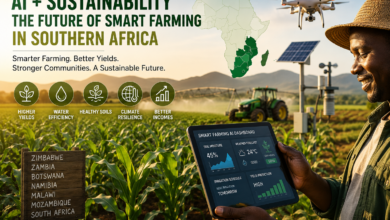
Discover how urban farming in Southern Africa is transforming food security using AI, green technologies, and smart farming systems to build sustainable cities in 2026.


Table of Contents
Introduction
Urban farming in Southern Africa is rapidly becoming one of the most important solutions to food insecurity, unemployment, and climate change. As cities expand across the region, traditional farming systems are struggling to meet the growing demand for fresh, affordable food. Rising temperatures, unpredictable rainfall, and limited arable land are pushing countries to rethink how food is produced.
This is where urban farming is making a powerful impact. By integrating artificial intelligence, sustainable technologies, and innovative growing systems, urban farming in Africa is transforming cities into food-producing ecosystems. Supported by global innovators like Microsoft and Google, this shift is creating smarter, greener, and more resilient urban environments.
What Is Urban Farming in Southern Africa?
Urban farming in the Remote parts of Africa refers to growing food within cities using modern, space-efficient, and technology-driven methods. Unlike traditional agriculture, urban farming focuses on maximizing limited space while reducing environmental impact.
Common approaches include:
- Vertical farming systems
- Hydroponic and aeroponic farming
- Rooftop gardens
- Indoor controlled-environment agriculture
Urban farming in Southern Africa is particularly important because it brings food production closer to consumers, reducing reliance on rural farming and imports.
𝐉𝐨𝐢𝐧 𝐎𝐮𝐫 𝐖𝐡𝐚𝐭𝐬𝐀𝐩𝐩 𝐆𝐫𝐨𝐮𝐩 𝐟𝐨𝐫 𝐦𝐨𝐫𝐞 𝐮𝐩𝐝𝐚𝐭𝐞𝐬
Why Urban Farming in Southern Africa Is Critical
Urban farming in Africa is driven by urgent regional challenges:
- Rapid urban population growth
- High food prices in cities
- Climate change affecting rural agriculture
- Limited access to fresh produce
Countries like Zimbabwe, South Africa, and Botswana are experiencing increasing pressure on their food systems.
Urban farming in Southern Africa offers a solution by ensuring consistent food supply, reducing costs, and improving nutrition in urban communities.
The Role of AI in Urban Farming in Southern Africa
Artificial intelligence is a major driver of urban farming in Southern Africa. It enables farmers and urban growers to optimize production and reduce waste.
Smart Monitoring Systems
AI-powered sensors track:
- Temperature and humidity
- Light exposure
- Nutrient levels
This ensures that crops grown through urban farming in Southern Africa receive optimal conditions at all times.
Predictive Analytics
AI systems analyze data to predict plant growth, detect diseases early, and improve yields. This makes urban farming in Southern Africa more efficient and reliable.
Automation
Automation systems manage irrigation, lighting, and nutrient delivery, reducing labor requirements and improving consistency. Companies like IBM are advancing these technologies globally.
𝐀𝐥𝐬𝐨 𝐑𝐞𝐚𝐝 : https://www.datadriveharvest.com/2026/03/10/artificial-intelligence-in-agriculture/
Green Technologies Powering Urban Farming in Southern Africa
Urban farming in Southern Africa depends on sustainable and resource-efficient technologies.
Vertical Farming
Vertical farming allows crops to be grown in stacked layers, making it ideal for densely populated cities like those in South Africa.
Hydroponics and Aeroponics
These systems grow plants without soil, using nutrient-rich water. They use significantly less water, which is critical in drought-prone areas.
Renewable Energy
Solar power is widely available in Southern Africa, making it a perfect energy source for urban farming systems.
Benefits of Urban Farming in Southern Africa
Improved Food Security
Urban farming in Southern Africa ensures that cities have access to fresh and nutritious food throughout the year.
Reduced Costs
By producing food locally, transportation and storage costs are minimized.
Job Creation
Urban farming creates employment opportunities for young people in cities.
Environmental Sustainability
Efficient use of water and energy reduces the environmental footprint of food production.
Real-World Impact of Urban Farming in Southern Africa
Zimbabwe
In Zimbabwe, urban farming is helping communities grow vegetables in backyards and small spaces, improving food access.
South Africa
South Africa is leading in commercial urban farming, with advanced vertical farms supplying fresh produce to urban markets.
Botswana
Urban farming initiatives in Botswana are promoting sustainable food production in cities with limited agricultural land.
Challenges Facing Urban Farming in Southern Africa
Despite its potential, urban farming in Southern Africa faces challenges:
- High setup costs for advanced systems
- Limited technical knowledge
- Energy requirements
- Lack of supportive policies
Addressing these barriers will be key to scaling urban farming across the region.
The Future of Urban Farming in Southern Africa
Urban farming in Southern Africa is expected to grow significantly in the coming years.
Expansion of Smart Cities
Urban farming will become part of smart city planning, integrating food production into urban infrastructure.
𝐀𝐥𝐬𝐨 𝐑𝐞𝐚𝐝 : https://www.datadriveharvest.com/2026/03/17/variable-rate-application/
Increased Investment
More funding is being directed toward agri-tech startups and sustainable farming solutions.
Wider Adoption of AI
As AI tools become more affordable, more urban farmers will adopt them to improve efficiency.
Why Urban Farming in Southern Africa Matters Now
Urban farming in Southern Africa is essential for addressing the region’s most pressing challenges. It provides a sustainable solution to food insecurity, unemployment, and environmental degradation.
By adopting urban farming, cities can become more self-sufficient, resilient, and environmentally friendly.
Conclusion
Urban farming in Southern Africa is transforming how food is produced and consumed in cities. By combining artificial intelligence, green technologies, and innovative farming methods, it offers a practical solution to the region’s challenges.
With support from global leaders like Microsoft and Google, urban farming in Southern Africa is set to play a major role in shaping the future of food systems.
As adoption grows, this approach will not only improve food security but also create jobs, reduce environmental impact, and build sustainable cities across the region.