Apply for the EERC Fellowship 2026 and receive a monthly stipend, free accommodation, research mentorship, training opportunities, and access to top researchers in Africa. Learn eligibility, benefits, and application details.

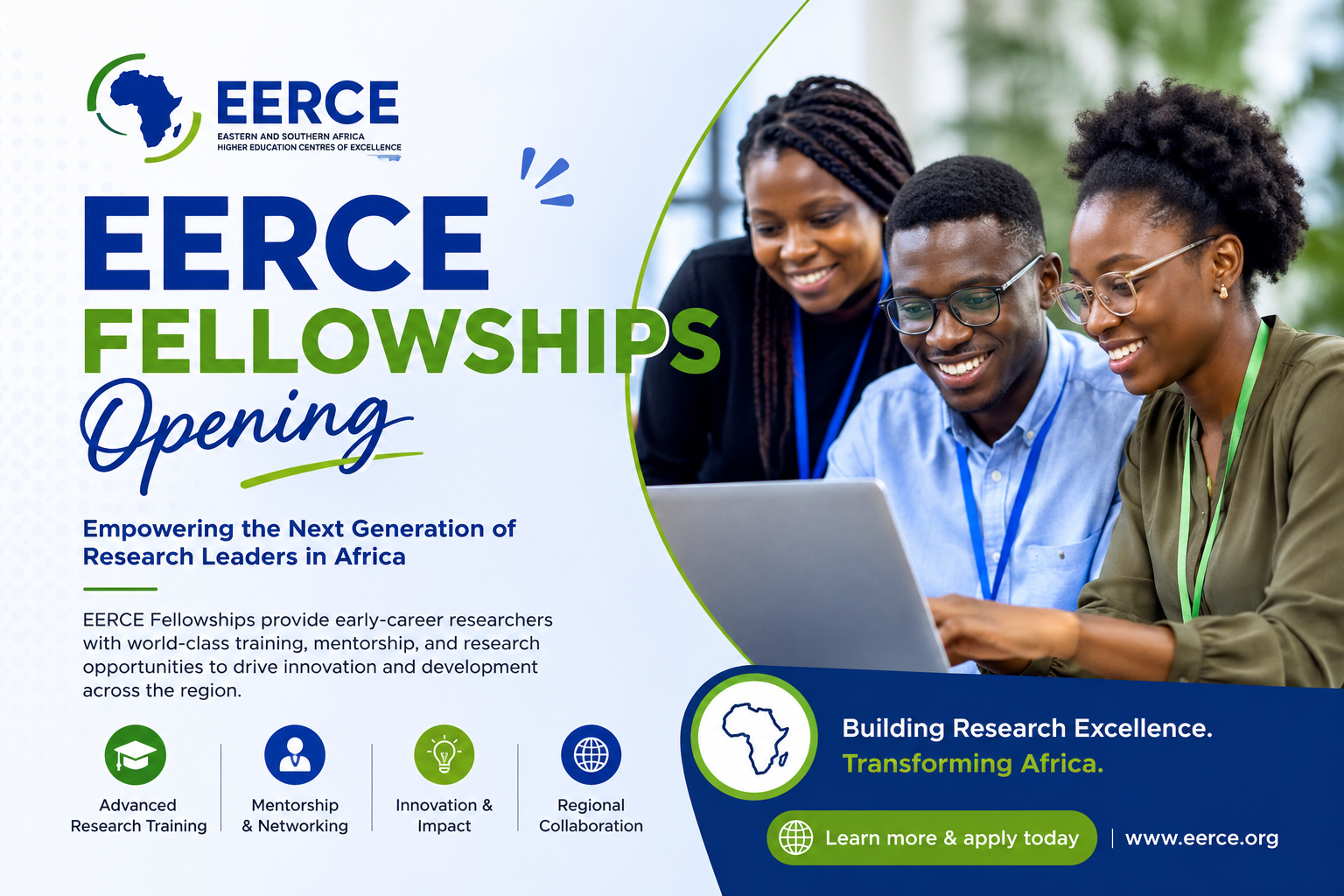
Table of Contents
EERC Fellowship 2026 Opens Applications for Early-Career Researchers in Africa
Are you an ambitious researcher looking to advance your academic career while contributing to solutions for climate change, sustainable agriculture, and environmental development? The Environmental and Economic Resource Centre (EERC) Fellowship 2026 is now accepting applications for its prestigious Cohort III (Spring) program, offering selected fellows financial support, accommodation, mentorship, and professional development opportunities.
This highly competitive fellowship is designed to empower emerging researchers with the tools, networks, and resources needed to generate evidence-based solutions for some of Africa’s most pressing environmental and agricultural challenges. The program brings together talented scholars and experienced researchers to strengthen policymaking and sustainable development across the continent.
What is the EERC Fellowship?
The Environmental and Economic Resource Centre (EERC) is a leading research organization focused on promoting inclusive agriculture, sustainable livelihoods, environmental management, and natural resource conservation across Africa. Through collaborations with local and international partners, EERC develops innovative research and policy solutions that address food security, climate resilience, poverty reduction, and ecosystem sustainability.
The 2026 Fellowship Cohort III aims to strengthen evidence-based policymaking by supporting high-quality research in Nigeria’s agri-food and environmental sectors. Fellows will spend three months conducting policy-relevant research while receiving guidance from experienced academics and researchers.
Fellowship Benefits
The EERC Fellowship offers a comprehensive support package designed to help participants focus on impactful research and professional growth.
Benefits Include:
✅ Monthly stipend to support living expenses throughout the fellowship period.
✅ Fully funded accommodation with internet access, reliable electricity, and additional amenities.
✅ Research mentorship from senior academics and experienced EERC researchers.
✅ Professional development and training opportunities.
✅ Access to collaborative research networks and policymakers.
✅ Opportunities to contribute to co-authored publications and policy briefs.
✅ Exposure to real-world policy challenges affecting agriculture, climate adaptation, and environmental sustainability.
These benefits make the fellowship one of the most attractive research opportunities currently available for early-career scholars interested in sustainable development and evidence-based policymaking.
𝐉𝐨𝐢𝐧 𝐎𝐮𝐫 𝐖𝐡𝐚𝐭𝐬𝐀𝐩𝐩 𝐆𝐫𝐨𝐮𝐩 𝐟𝐨𝐫 𝐌𝐨𝐫𝐞 𝐔𝐩𝐝𝐚𝐭𝐞𝐬
Research Themes
Applicants must propose research projects aligned with at least two of the fellowship’s thematic areas:
1. Land-Use Systems and Governance
Research focused on land management policies, sustainable land use practices, and governance frameworks that influence environmental outcomes.
2. Climate Change and Biodiversity
Projects exploring climate adaptation, biodiversity conservation, ecosystem resilience, and environmental sustainability.
3. Gender and Social Inclusion
Studies examining social equity, gender-responsive policies, and inclusive development strategies within agricultural and environmental systems.
4. Water-Energy-Food Nexus
Research investigating the interconnected relationship between water resources, energy systems, and food production.
All submissions must be sent to:
apply@eerce.org
Deadline: June 30, 2026 (midnight)
Who Can Apply?
The fellowship is intended for early-career researchers with strong academic backgrounds and a passion for generating impactful research. Eligible candidates generally include individuals who:
- Hold a Master’s or PhD degree in a relevant discipline.
- Are affiliated with a university or research institution.
- Have experience using statistical or econometric software such as R or similar tools.
- Demonstrate the ability to develop policy-relevant research proposals.
- Possess expertise in fields such as Agricultural Economics, Environmental Science, Agroecology, Development Economics, or related disciplines.
Female researchers are strongly encouraged to apply.
𝐕𝐢𝐬𝐢𝐭 𝐎𝐟𝐟𝐢𝐜𝐢𝐚𝐥 𝐒𝐢𝐭𝐞 𝐓𝐨 𝐀𝐩𝐩𝐥𝐲
Required Application Documents
Applicants are expected to prepare and submit a complete application package that may include:
- Motivation letter
- Research concept note
- Curriculum Vitae (CV)
- Academic qualification documents
- Institutional identification
- Reference letters from academic or institutional supervisors
- Additional supporting documentation where applicable.
Preparing a strong concept note that clearly demonstrates policy relevance and methodological rigor can significantly improve an applicant’s chances of selection.
Why the EERC Fellowship Matters
Africa faces growing challenges related to climate change, food security, natural resource management, and environmental sustainability. Addressing these issues requires high-quality research that can inform government policies and development programs.
The EERC Fellowship provides researchers with an opportunity to bridge the gap between academic research and practical policymaking. Participants gain hands-on experience working on real-world challenges while building networks with experts from academia, government, and international development organizations.
For many scholars, the fellowship serves as a launching pad toward advanced research careers, policy advisory roles, and international collaborations.
Tips for a Successful Application
To maximize your chances of being selected:
- Align your research proposal with at least two thematic areas.
- Demonstrate how your study will contribute to evidence-based policymaking.
- Present a clear methodology and expected outcomes.
- Highlight relevant publications, research experience, and technical skills.
- Ensure all required documents are complete and professionally prepared.
Final Thoughts
The EERC Fellowship 2026 offers an exceptional opportunity for researchers seeking funding, mentorship, and professional growth while contributing to sustainable development across Africa. With financial support, accommodation, expert supervision, and access to influential research networks, the program is designed to help scholars transform innovative ideas into impactful policy solutions.
If you are passionate about climate resilience, sustainable agriculture, environmental conservation, or social inclusion, this fellowship could be the next major step in your research journey.
Disclaimer: Data Drive Harvest (DDH) is not the hiring organization and does not process applications. DDH only shares opportunity information for educational and informational purposes. Applicants should submit their applications directly through the official organization responsible for this opportunity.