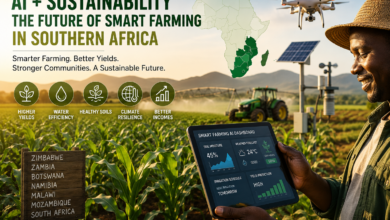
Discover how AI-powered harvesting is revolutionizing agriculture across Africa in 2026. Learn how smart harvesting technology is helping farmers increase yields, reduce waste, improve food security, and build climate-resilient farms.

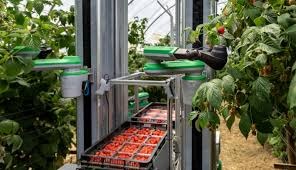
Table of Contents
AI-Powered Harvesting Is Changing the Way Africa Farms
For generations, harvesting has been one of the most labor-intensive stages of farming.
Farmers often spend long days in the field, racing against weather conditions, labor shortages, and rising operational costs to bring crops from the field to the market. But a new technological revolution is changing that reality.
Artificial Intelligence (AI) is now transforming how crops are harvested, helping farmers work smarter, reduce losses, and improve productivity. Around the world, AI-powered harvesting systems are using computer vision, robotics, sensors, and machine learning to identify ripe crops, harvest them with precision, and provide valuable farm data in real time.
For Africa, where agriculture remains the backbone of many economies, AI-powered harvesting could become one of the most important innovations shaping the future of food production.
Why Harvesting Remains One of Agriculture’s Biggest Challenges
Growing a successful crop is only half the battle.
Harvesting at the right time is critical because delays can lead to:
- Crop losses
- Reduced quality
- Lower market prices
- Increased labor costs
- Post-harvest waste
Many African farmers continue to rely heavily on manual labor, which can become increasingly difficult due to labor shortages, rising wages, and climate-related disruptions. AI-powered harvesting systems are emerging as a solution to these challenges by improving efficiency and accuracy during one of the most important stages of crop production.
What Is AI-Powered Harvesting?
AI-powered harvesting combines several advanced technologies to automate or assist harvesting activities.
These technologies include:
- Artificial Intelligence
- Machine Learning
- Computer Vision
- Robotics
- Sensors
- Satellite Data
- Internet of Things (IoT)
Using cameras and sensors, AI systems can identify which fruits, vegetables, or crops are ready for harvesting. Robotic arms or harvesting equipment can then collect the crops with remarkable precision while minimizing damage.
Unlike traditional harvesting equipment that treats every crop the same, AI systems make decisions based on real-time information.
The result is smarter and more efficient harvesting.
How AI Identifies Crops Ready for Harvest
One of the most impressive capabilities of AI harvesting technology is computer vision.
Computer vision allows machines to “see” crops similarly to how humans do.
Using cameras and image recognition software, AI systems can analyze:
- Crop color
- Size
- Shape
- Ripeness
- Quality indicators
This enables harvesting systems to distinguish between crops that are ready and those that need more time to mature. Advanced harvesting robots are already using computer vision and AI-driven navigation to harvest delicate, high-value crops while preserving quality and reducing waste.
For farmers, this means improved consistency and better market-ready produce.
𝐀𝐥𝐬𝐨 𝐑𝐞𝐚𝐝 : https://www.datadriveharvest.com/2026/05/06/trends/
Why AI-Powered Harvesting Matters for Africa
Agriculture supports millions of livelihoods across Africa and remains a critical contributor to food security and economic growth.
Yet many farmers face ongoing challenges, including:
- Climate variability
- Limited access to labor
- Rising production costs
- Post-harvest losses
- Low productivity
Research shows that AI-powered precision agriculture has the potential to improve efficiency, optimize resource use, and strengthen food security across the continent.
For countries in Southern Africa, including Zimbabwe, Zambia, Malawi, Botswana, Namibia, Mozambique, and South Africa, AI harvesting technologies could help farmers adapt to increasingly challenging agricultural conditions.
Reducing Food Waste Through Smart Harvesting
One of the biggest benefits of AI-powered harvesting is waste reduction.
Traditional harvesting methods can result in:
- Damaged produce
- Missed crops
- Premature harvesting
- Delayed harvesting
AI systems help ensure crops are harvested at the optimal time.
This precision reduces losses both in the field and throughout the supply chain. Smart harvesting technologies are specifically designed to improve harvesting accuracy while minimizing waste and maximizing productivity.
In a region where food security remains a major concern, reducing waste can have a significant impact.
Helping Farmers Make Better Decisions
AI harvesting systems do more than collect crops.
Many technologies also gather valuable information such as:
- Yield estimates
- Crop health data
- Field performance metrics
- Harvest timing insights
This information helps farmers make more informed decisions about future planting, irrigation, fertilization, and resource allocation. AI-powered agricultural systems increasingly serve as decision-support tools that improve overall farm management.
The result is a more data-driven approach to farming.
Real Progress Is Already Happening in Africa
AI is no longer a concept limited to developed countries.
Across Africa, governments, agricultural organizations, and technology companies are actively investing in AI-driven agriculture.
In Zimbabwe, the Food and Agriculture Organization (FAO) has demonstrated how artificial intelligence is being used to improve climate resilience, crop monitoring, pest surveillance, irrigation management, food security analysis, and advisory services. AI-powered systems are already supporting farmers and policymakers with better agricultural data and decision-making tools.
Zimbabwean AgTech companies are also leveraging satellite imagery, machine learning, and big data analytics to provide precision agriculture solutions across multiple African countries.
These developments show that Africa is becoming an active participant in the global agricultural technology revolution.
Opportunities for Young Africans
The rise of AI in agriculture is creating entirely new career opportunities.
Emerging roles include:
- Agricultural data analysts
- AI specialists
- Drone operators
- Precision agriculture consultants
- Robotics technicians
- Farm technology advisors
- AgTech entrepreneurs
For young people interested in technology and agriculture, the sector offers exciting opportunities to combine innovation with real-world impact.
As digital agriculture expands, demand for these skills is expected to grow significantly.
Challenges That Still Need to Be Addressed
Despite its promise, AI-powered harvesting is not without challenges.
Key barriers include:
- High technology costs
- Limited internet connectivity
- Digital literacy gaps
- Infrastructure limitations
- Access to financing
Experts note that widespread adoption of AI in African agriculture will require investment in education, infrastructure, connectivity, and farmer support systems. Without these investments, many smallholder farmers may struggle to access the benefits of emerging technologies.
Addressing these challenges will be essential to ensuring inclusive agricultural transformation.
𝐉𝐨𝐢𝐧 𝐎𝐮𝐫 𝐖𝐡𝐚𝐭𝐬𝐀𝐩𝐩 𝐆𝐫𝐨𝐮𝐩 𝐟𝐨𝐫 𝐌𝐨𝐫𝐞 𝐔𝐩𝐝𝐚𝐭𝐞𝐬
The Future of Harvesting Is Smart
The agricultural sector is entering a new era.
AI-powered harvesting is helping farmers improve efficiency, reduce losses, enhance sustainability, and strengthen food security. What once seemed futuristic is quickly becoming a practical reality.
As technology becomes more affordable and accessible, AI harvesting systems are likely to play an increasingly important role across Africa’s farms.
For a continent seeking to feed a growing population while adapting to climate change, the combination of agriculture and artificial intelligence could become one of the most powerful tools for sustainable development.
Final Thoughts
AI-powered harvesting is more than just a technological innovation.
It represents a new way of thinking about agriculture.
By combining precision, automation, and data-driven decision-making, farmers can produce more food while using fewer resources and reducing waste.
Across Africa, this technology has the potential to transform livelihoods, improve food security, and create new economic opportunities for millions of people.
The future of farming is no longer just about hard work.
It is about smart work.
And that future is already taking shape across the continent.