Discover Southern Africa’s Farming Revolution: How AI Is Helping Farmers Grow More Food With Less Risk.

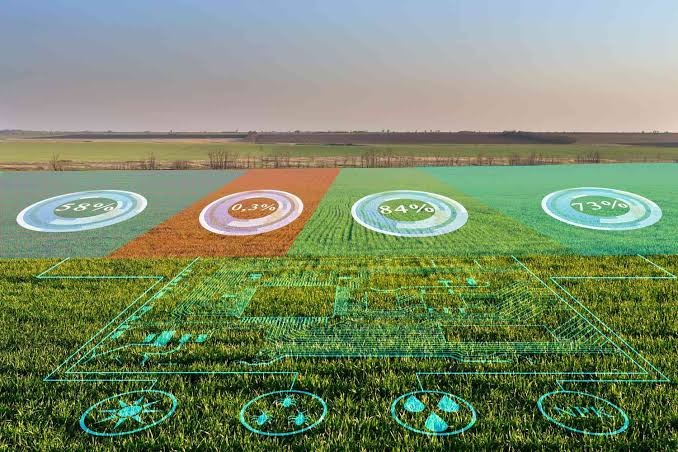
Table of Contents
Artificial Intelligence in Agriculture: How Southern Africa Can Harness Artificial Intelligence to Transform Farming in 2026
Southern Africa stands at a pivotal moment in its agricultural journey. Farmers across Zimbabwe, Zambia, Malawi, Mozambique, Botswana, Namibia, and South Africa are facing increasingly unpredictable weather patterns, rising input costs, persistent pest outbreaks, and the growing impacts of climate change. At the same time, rapid advances in Artificial Intelligence (AI) are opening new possibilities to transform agriculture, helping farmers make better decisions, increase productivity, and build more resilient farming systems.
While Artificial Intelligence has already gained traction in developed agricultural economies, its greatest potential may lie in Africa, where millions of smallholder farmers produce the majority of the continent’s food. By combining Artificial Intelligence with local knowledge, mobile technology, satellite imagery, and precision farming, Southern Africa can improve food security while creating a more sustainable agricultural future.
Why Southern Africa Needs Artificial Intelligence in Agriculture
Agriculture contributes significantly to employment and economic growth across Southern Africa. However, many farmers still depend on traditional farming practices and rainfall, leaving them vulnerable to droughts, floods, pests, and fluctuating market prices.
AI offers practical solutions by enabling farmers to make informed decisions using real-time data rather than relying solely on experience or guesswork.
Some of the major challenges facing farmers include:
- Unpredictable rainfall patterns
- Rising fertilizer and pesticide costs
- Crop diseases spreading rapidly
- Limited access to extension services
- Water shortages
- Poor market information
- Labour shortages
- Declining soil fertility
Artificial Intelligence can help address many of these challenges through smarter farming practices.
Precision Agriculture is Changing Farming
Precision agriculture is one of the fastest-growing applications of Artificial Intelligence. Instead of treating an entire field the same way, Artificial Intelligence enables farmers to manage every section of their farm based on its specific needs.
Using satellite imagery, drones, sensors, and GPS technology, Artificial Intelligence systems can monitor:
- Soil moisture
- Crop health
- Nutrient deficiencies
- Weed infestations
- Pest outbreaks
- Water requirements
This information allows farmers to apply fertilizer, irrigation, and pesticides only where needed, reducing waste while increasing yields.
For commercial farmers in Zimbabwe and South Africa, precision agriculture can significantly lower production costs while improving profitability.
𝐀𝐥𝐬𝐨 𝐑𝐞𝐚𝐝 : https://www.datadriveharvest.com/2026/05/06/trends/
AI Helps Farmers Detect Crop Diseases Earlier
One of the most exciting developments in agriculture is Artificial Intelligence-powered disease detection.
Farmers can now use smartphone applications to photograph leaves showing signs of disease. Artificial Intelligence algorithms analyse the images within seconds and identify possible problems, often before they spread throughout the field.
For crops commonly grown in Southern Africa, Artificial Intelligence can assist in detecting diseases affecting:
- Maize
- Tobacco
- Soybeans
- Groundnuts
- Tomatoes
- Potatoes
- Cotton
- Wheat
- Beans
Early diagnosis enables timely intervention, reducing crop losses and improving food production.
Weather Forecasting is Becoming More Accurate
Weather remains one of the biggest risks facing agriculture.
Artificial Intelligence combines historical climate records with satellite observations and real-time weather information to produce more localized forecasts.
Farmers can use Artificial Intelligence to determine:
- The best planting dates
- Expected rainfall
- Drought risks
- Frost warnings
- Heat stress periods
- Harvest timing
For rain-fed agriculture, which dominates much of Southern Africa, better weather intelligence can make the difference between a successful harvest and significant losses.
Smarter Irrigation Saves Water
Water scarcity continues to affect many farming regions.
Artificial Intelligence -powered irrigation systems use sensors to monitor soil moisture and automatically determine when crops need water.
Instead of irrigating according to fixed schedules, farmers irrigate based on actual crop requirements.
Benefits include:
- Lower water consumption
- Reduced electricity costs
- Healthier crops
- Higher yields
- Better water conservation
Countries such as Namibia, Botswana, and Zimbabwe could benefit significantly from intelligent irrigation systems due to their frequent drought conditions.
𝐉𝐨𝐢𝐧 𝐎𝐮𝐫 𝐖𝐡𝐚𝐭𝐬𝐀𝐩𝐩 𝐆𝐫𝐨𝐮𝐩 𝐟𝐨𝐫 𝐌𝐨𝐫𝐞 𝐔𝐩𝐝𝐚𝐭𝐞𝐬
Artificial Intelligence Improves Pest Management
Pests such as Fall Armyworm continue to threaten maize production across Southern Africa.
Artificial Intelligence helps monitor pest populations using drones, cameras, and satellite imagery.
Artificial Intelligence models can predict:
- Where outbreaks are likely to occur
- When pest populations may increase
- Which crops face the greatest risk
This allows farmers to apply pesticides more efficiently while reducing unnecessary chemical use.
AI Supports Livestock Farmers
Artificial Intelligence is not limited to crop farming.
Livestock farmers are increasingly using AI to monitor:
- Animal health
- Feeding patterns
- Milk production
- Weight gain
- Disease outbreaks
- Breeding performance
Wearable sensors can alert farmers when cattle show signs of illness or abnormal behaviour, allowing faster veterinary intervention and reducing livestock losses.
AI Makes Agricultural Markets More Transparent
Many farmers struggle to access reliable market information.
Artificial Intelligence -powered digital platforms help producers compare prices across markets, identify buyers, forecast demand, and choose the best time to sell.
This reduces exploitation by middlemen and enables farmers to negotiate better prices for their produce.
Southern Africa Must Invest in Digital Agriculture
To fully benefit from Artificial Intelligence , governments, research institutions, universities, agritech startups, and development partners need to work together.
Key investment areas include:
- Rural internet connectivity
- Digital literacy
- Affordable smartphones
- Agricultural research
- Farmer training
- AI innovation hubs
- Open agricultural data
Public-private partnerships will play a vital role in ensuring technologies are accessible to both commercial and smallholder farmers.
Opportunities for Zimbabwe
Zimbabwe has enormous potential to become a regional leader in AI-driven agriculture.
The country already has:
- Strong agricultural universities
- Skilled ICT professionals
- Growing mobile connectivity
- Expanding agritech startups
- Commercial farming expertise
AI applications could support:
- Tobacco production
- Maize farming
- Horticulture
- Livestock management
- Irrigation scheduling
- Climate-smart agriculture
By integrating artificial intelligence into extension services, farmers could receive real-time recommendations directly on their mobile phones, improving productivity across the agricultural sector.
Challenges That Must Be Addressed
Despite its promise, AI adoption in Southern Africa faces several barriers.
These include:
- Limited internet coverage in rural areas
- High technology costs
- Inadequate digital skills
- Limited access to agricultural data
- Electricity shortages
- Data privacy concerns
- Low awareness among farmers
Addressing these challenges will require coordinated investment from governments, private companies, development organizations, and educational institutions.
The Future of AI in Southern African Agriculture
Artificial Intelligence is no longer a technology of the future—it is becoming an essential tool for modern farming. As climate change intensifies and food demand continues to grow, AI offers practical solutions that can help farmers increase productivity while using resources more efficiently.
For Southern Africa, the opportunity extends beyond higher yields. AI can improve food security, create jobs in agritech, support climate resilience, and empower a new generation of digitally connected farmers.
The countries that invest in digital agriculture today will be better positioned to feed their populations, strengthen rural livelihoods, and compete in tomorrow’s global agricultural economy.
Final Thoughts
The future of farming in Southern Africa will be shaped by innovation, data, and technology. Artificial Intelligence has the potential to transform agriculture from a sector vulnerable to climate uncertainty into one driven by precision, efficiency, and informed decision-making.
For farmers across Zimbabwe, Zambia, Botswana, Malawi, Mozambique, Namibia, and South Africa, embracing it is not about replacing traditional farming knowledge—it is about enhancing it. By combining local expertise with intelligent technologies, Southern Africa can build a more productive, sustainable, and food-secure future.