Crop Price Guessing with Computers: A Simple Guide for Farmers and Job Seekers 2026.

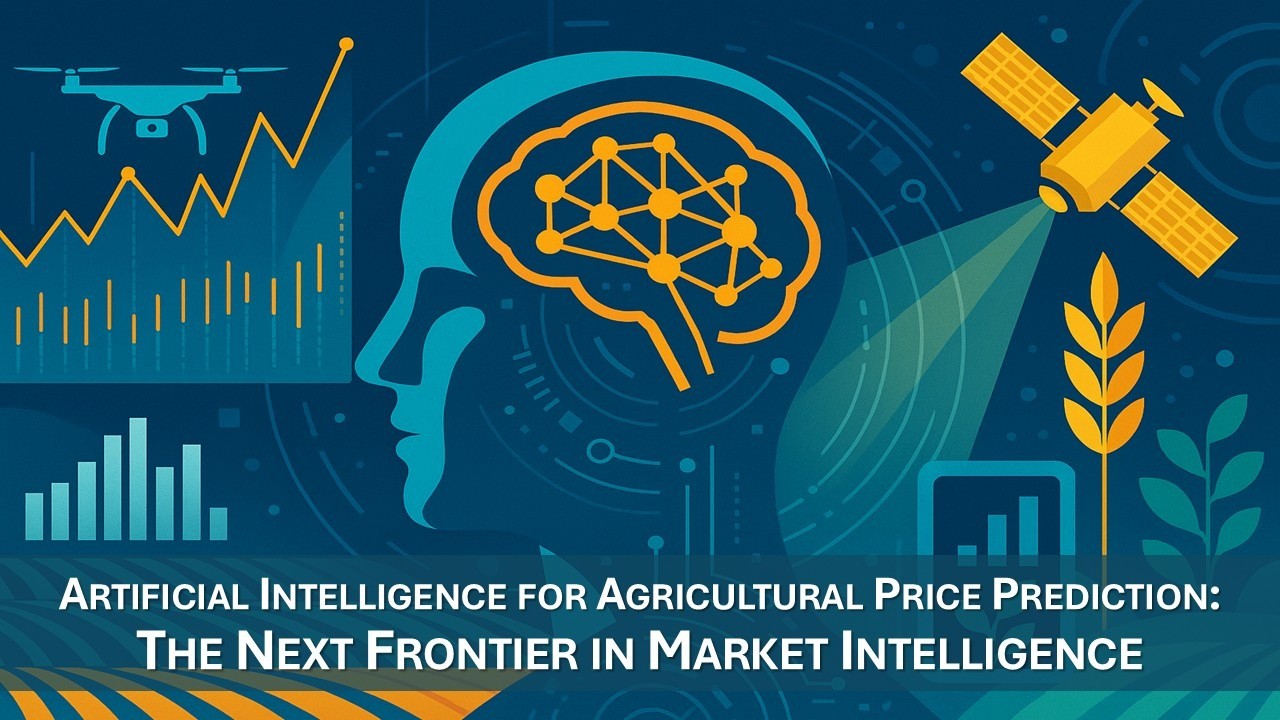
Table of Contents
How Smart Programs Help Farmers Know What Their Crops Will Sell For Tomorrow
Introduction
Crop price guessing with computers is changing how farmers plan their work and their money.
For a long time, farmers had to guess what price their crops would sell for. They looked at the sky, asked other farmers, or just hoped for the best. Sometimes they were right. Often they were wrong. And being wrong costs money.
But now, crop price guessing with computers is much more accurate than human guessing. Scientists in India did a study and found a smart computer program that works very well for this task. It looks at things like weather, how much food people want to buy, and how much it costs to move food around.
This article explains everything in simple words. No hard technical terms. Just useful information that anyone can understand. If you are a farmer, a student looking for a job, or just someone curious about crop price guessing with computers, this guide is for you.
𝐀𝐥𝐬𝐨 𝐑𝐞𝐚𝐝 : https://www.datadriveharvest.com/2026/03/18/crop-intelligence/
Part 1: The Problem – Why Old Ways of Guessing Do Not Work
Imagine you grow rice. You work hard for many months. You plant seeds, water the fields, remove weeds, and protect the crops from pests. When harvest time comes, you take your rice to the market.
But here is the problem. You do not know if the price will be high or low.
If the price is high, you make good money and can support your family. If the price is low, you lose money or barely break even. All your hard work feels wasted.
Many different things affect crop prices. Here are the main ones.
Too much rain or too little rain can damage crops. This reduces how much food is available. When less food is available, prices usually go up. But sometimes, too much rain in one area means farmers in another area have a good harvest, so prices drop.
Bugs and plant diseases can destroy whole fields. When this happens suddenly, the supply of that crop goes down and prices can jump very fast. Farmers who still have healthy crops might get a good price, but only if they are lucky.
The cost of moving food from the farm to the city market also matters. If fuel prices go up, truck drivers charge more to transport crops. That extra cost gets added to the final price.
How many people want to buy a certain crop is also important. If many people want rice but there is not enough rice, prices go up. If few people want rice but there is too much rice, prices go down.
How many other farmers are selling the same crop also affects price. If everyone in your area plants corn, there will be too much corn at the market. Prices will drop.
All of these factors change all the time. It is very confusing. That is why crop price guessing with computers is so valuable. Computers can look at all these factors at once and find patterns that humans cannot see.
Part 2: The Solution – How Crop Price Guessing with Computers Actually Works
Scientists in India decided to solve this problem. They collected real information from the Indian government about crop prices. They gathered data from different states including Karnataka, Maharashtra, and others. They looked at different crops such as wheat, rice, corn, cotton, sugarcane, pulses, millets, barley, groundnut, and soybean.
They also collected weather data including temperature and rainfall. They gathered market data about how much people wanted to buy and how much food was available for sale. They even looked at transportation costs and fertilizer use.
After collecting all this information, they tested five different computer programs. Each program tried to guess future crop prices. Then the scientists measured which program was the most accurate.
The winner for crop price guessing with computers was a program called XGBoost. You do not need to remember the name. What matters is that this program was very good at its job. It got the answers right 98.8 percent of the time. That is almost perfect.
Here is how all five programs performed, explained in simple terms.
The XGBoost program was the best for crop price guessing with computers. It was accurate 98.8 percent of the time. It made very few mistakes. The scientists recommend using this program.
The Random Forest program was almost as good. It was accurate 98.6 percent of the time. It is also a good choice for crop price guessing with computers, just slightly behind XGBoost.
The AdaBoost program was much worse. It was only 79.4 percent accurate. That means it made mistakes about one out of every five times. That is not reliable enough for farmers.
The Linear Regression program was even worse at 62.1 percent accuracy. It made mistakes more than one out of every three times.
The worst program was called SVR. It was only 15.2 percent accurate. That means it was wrong most of the time. No farmer should use this program for crop price guessing with computers.
So the simple lesson is this. If you want to use crop price guessing with computers, use XGBoost or Random Forest. The other programs are not good enough for real-world use.
𝐀𝐥𝐬𝐨 𝐑𝐞𝐚𝐝 : https://www.datadriveharvest.com/2026/03/25/ai-carbon-farming/
Part 3: What Factors Matter Most for Crop Price Guessing with Computers
The computer program looked at many different factors. But some factors were more important than others. The scientists analyzed which inputs had the biggest impact on price predictions.
The single most important factor for crop price guessing with computers was demand volume. That means how many people want to buy the crop. When demand is high and supply is low, prices go up. When demand is low, prices go down even if supply is also low. Demand is the strongest driver of price changes.
The second most important factor was supply volume. That means how much of the crop is available for sale. When there is too much supply, prices drop. When there is not enough supply, prices rise. Supply and demand work together to determine the final price.
The third most important factor was transportation cost. Moving food from farms to markets costs money. When fuel prices increase or roads are bad, transportation costs go up. That extra cost gets passed on to the final price that consumers pay and farmers receive.
Other factors that mattered but were less important included market competition, rainfall amounts, and pest infestation levels. These factors still affect prices, but not as directly as supply, demand, and transportation costs.
An interesting finding from the study was that weather factors like temperature and rainfall were less important than market factors for crop price guessing with computers. Many people assume that weather is the biggest driver of crop prices. But this study showed that supply and demand dynamics matter more in the short term. That means farmers should pay close attention to market conditions, not just the weather forecast.
Part 4: How Crop Price Guessing with Computers Helps Farmers and Policymakers
This research is not just academic. It has real benefits for real people.
For farmers, crop price guessing with computers changes everything. A farmer could learn that wheat prices will go up next month. That farmer can then wait to sell and earn more money. Another farmer could learn that rice prices will drop soon. That farmer can sell immediately before the drop happens. A third farmer could learn that too many other farmers are planting corn this season. That farmer can choose a different crop instead.
The result is more money, less stress, and better decisions. Farmers stop guessing and start knowing. Crop price guessing with computers makes this possible.
For government policymakers, this tool is also valuable. Agencies like the Food and Agriculture Organization of the United Nations or national agricultural ministries can use these predictions to manage food security programs. They can set minimum support prices at the right levels. They can plan food storage so that food does not go to waste. They can respond to potential food shortages before those shortages become crises.
For agri-tech companies, crop price guessing with computers creates new opportunities. A company could build a mobile app for farmers. The app would tell each farmer: Based on current weather and market conditions in your district, the price of your crop will change by this amount in the next two months. Here is what you should do. That is not science fiction. That is exactly what this research enables.
The scientists who conducted the study said this in their conclusion. The model substantially reduces the uncertainty of price forecasting and permits more profitable management practices for sustainable agriculture. In simple words, farmers can stop guessing and start knowing.
𝐉𝐨𝐢𝐧 𝐎𝐮𝐫 𝐖𝐡𝐚𝐭𝐬𝐀𝐩𝐩 𝐆𝐫𝐨𝐮𝐩 𝐟𝐨𝐫 𝐦𝐨𝐫𝐞 𝐔𝐩𝐝𝐚𝐭𝐞𝐬
Part 5: Jobs Related to Crop Price Guessing with Computers
If you like farming and you like computers, there are good jobs waiting for you. The field of crop price guessing with computers is growing fast. Companies and organizations need people who understand both farming and technology.
Here are five jobs where you can help farmers with this technology.
The first job is a farming data analyst. This person looks at farm numbers including weather data, price records, and crop amounts. They find useful patterns that help farmers make better decisions. The skills needed are basic computer skills, spreadsheets, and maybe some Python programming. Many of these jobs can be done remotely from home.
The second job is an AI helper for farms. This person helps set up computer programs that guess prices or check crop health. They work with the technology so that farmers do not have to. The skills needed are some coding ability and basic knowledge of AI tools.
The third job is a remote farming advisor. This person uses computer results to tell farmers what to plant and when to sell. They can do this work from anywhere in the world as long as they have an internet connection. The skills needed are farming knowledge plus basic computer skills.
The fourth job is a food price analyst for government or the United Nations. This person helps organizations like the FAO understand future food prices. This helps them plan for food shortages and allocate resources properly. The skills needed are data analysis skills plus an interest in helping people.
The fifth job is a crop health tracker using satellites. This person uses satellite pictures to see if crops are healthy. This helps predict how much food will be available in the future. The skills needed are basic image processing skills and an interest in farming and space technology.
The good news is that many of these jobs can be done remotely. You do not have to live on a farm. You just need an internet connection and the right skills.
Part 6: Limitations of This Research
Nothing is perfect. This research has some limitations that are important to understand.
First, the study only used data from India. The researchers themselves noted that the model might work differently in Africa, Europe, or the Americas. Different regions have different weather patterns, different crops, and different market systems. More testing is needed before we can say this works everywhere.
Second, the model uses historical data to guess the future. But if something totally unexpected happens, the computer might get confused. Examples include a sudden war, an extreme weather event that has never happened before, a new government policy that changes everything, or a global pandemic that disrupts supply chains. These events are very hard for any model to predict.
Third, the current model only uses structured numerical data. It does not use satellite images or social media sentiment or news articles. The researchers acknowledged that adding these other data sources could potentially make the model even better in the future.
Despite these limitations, the XGBoost model is still much better than guessing or using traditional statistical methods. Farmers and policymakers can use it with confidence for most normal situations.
Simple Steps If You Want to Learn This
If you are interested in crop price guessing with computers, here is how to start. You do not need a university degree.
Step one is to learn basic computer skills. Practice typing. Learn how to use spreadsheets like Excel or Google Sheets. These are free or low cost.
Step two is to learn simple Python programming. It is not as hard as you think. Go to YouTube and search for Python for beginners. Try free websites like Codecademy or Kaggle. Both have excellent free content.
Step three is to practice with real farm data. Go to Kaggle.com and search for crop price prediction dataset. Download it and play around with the numbers. Try to make your own simple predictions.
Step four is to take a free AI course. Google offers a Machine Learning Crash Course that is completely free. No payment is needed. It takes a few hours to complete.
Step five is to start looking for jobs. Search for terms like agricultural data analyst, remote farming AI jobs, or FAO careers. Check the websites of the Food and Agriculture Organization, the World Bank, and large agri-tech companies.
Summary
Here is everything you need to remember from this article.
This article is about crop price guessing with computers. The technology works very well. The best computer program is called XGBoost, and it is 98.8 percent accurate. The second best is Random Forest at 98.6 percent accurate.
The most important factors for crop prices are how much people want to buy, how much food is available, and how much it costs to transport food. Weather matters, but less than supply and demand.
You can get a job in this field. Five different types of jobs are described in this article. You can start learning with free online resources. You do not need a university degree to begin.
Farming is hard work. Prices go up and down. Farmers lose sleep worrying about money. But now, crop price guessing with computers can help. A computer program can look at weather, market data, and other information. Then it can tell a farmer when to sell and when to wait.
That means less guessing, more profit, and less stress.
The scientists in India proved it works. Now it is time to use it to help farmers everywhere. You do not need to be a genius to work in this field. You just need to care about farming and be willing to learn some computer skills. If that sounds like you, the future is wide open.