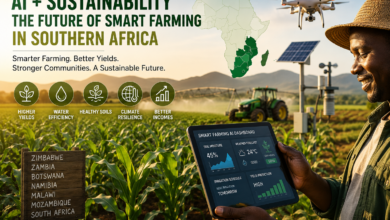
Africa’s AI startups are rising fast, but the continent still lags behind global leaders. Discover the real reasons why—and what must change before 2030.


Table of Contents
Why Africa Is Still Lagging Behind in AI — And What Must Change Before 2030
Africa’s AI Boom Is Real… But There’s a Catch
Artificial Intelligence is exploding across the world. From self-driving systems to predictive healthcare, AI is reshaping how economies grow and compete.
In Africa, a new wave of AI startups is rising fast. These companies are solving real problems—helping farmers predict crop yields, enabling mobile credit scoring, and improving healthcare diagnostics.
But despite this progress, Africa is still far behind global leaders.
The gap is not small. It’s structural.
And if it’s not addressed soon, the continent risks missing out on one of the biggest economic revolutions of our time.
The Global AI Race: Africa vs the Rest of the World
While African innovation is growing, countries like the United States and China are operating on a completely different scale.
Globally:
- Billions of dollars are poured into AI every year
- Massive data centers power advanced machine learning
- Top universities produce world-class AI talent
In Africa:
- Funding remains limited
- Infrastructure is still developing
- Skilled AI professionals are in short supply
This creates a serious imbalance.
Africa is innovating—but not scaling.
Africa’s AI Startups Are Solving Real Problems
One thing Africa is doing right is focusing on practical AI solutions.
Unlike global tech giants that chase cutting-edge automation, African startups are grounded in everyday challenges.
They are building:
- AI tools for farmers to manage crops
- Mobile-based financial systems for the unbanked
- Health diagnostics for remote communities
This approach makes African AI unique.
It’s not about hype—it’s about impact.
But even the most innovative startups face one major problem: they struggle to grow beyond small markets.
𝐀𝐥𝐬𝐨 𝐑𝐞𝐚𝐝 : https://www.datadriveharvest.com/2025/12/02/ai-in-smart-agriculture/#google_vignette
The Infrastructure Problem Africa’s AI No One Can Ignore
If there’s one reason Africa’s AI is lagging behind, it’s infrastructure.
AI depends on:
- Fast internet
- Reliable electricity
- Cloud computing
- Data storage
Across many African countries, these are still inconsistent.
In some regions:
- Internet access is limited
- Power outages are frequent
- Data centers are scarce
Now compare that to the U.S. or China, where Africa’s AI systems run on massive, uninterrupted infrastructure.
The difference is massive—and it directly affects growth.
The Funding Gap Is Even Bigger Than You Think
Money drives innovation. And this is where Africa faces one of its biggest challenges.
Global AI ecosystems attract billions in venture capital.
Africa gets a tiny fraction of that.
Investors often see African markets as:
- High risk
- Fragmented
- Hard to scale
Even though funding is slowly improving, it’s still not enough to compete globally.
Without capital, startups can’t expand.
Without expansion, innovation stays local.
Africa’s AI Talent Problem: A Silent Crisis
AI is not just about machines—it’s about people.
And Africa is facing a serious talent gap.
While interest in AI is growing, many countries lack:
- Advanced training programs
- Research institutions
- Industry-level experience
On top of that, many skilled professionals leave for better opportunities abroad.
This “brain drain” slows down progress even further.
Meanwhile, countries like the U.S. and China are producing thousands of AI experts every year.
Data Is the New Oil — And Africa’s AI Is Still Drilling
AI runs on data. But Africa faces major challenges here too.
Many industries are not fully digitized.
Data is often incomplete or unstructured.
Language diversity makes standardization difficult.
Without high-quality data, AI systems cannot perform effectively.
This is one of the most overlooked reasons why Africa is lagging behind.
Market Fragmentation Is Holding Startups Back
Africa is not one market—it’s over 50 different economies.
Each country has:
- Its own regulations
- Its own currency
- Its own digital ecosystem
This makes scaling extremely difficult.
A startup that succeeds in one country may struggle to expand into another.
Compare that to the U.S. or China, where companies can scale nationally with ease.
The “Small AI” Strategy That Could Change Everything
Here’s where Africa flips the script.
Instead of trying to compete with global giants, many African innovators are focusing on something different: Small AI.
This means:
- Lightweight AI tools
- Mobile-first solutions
- Low-cost systems that work in low-resource environments
It’s a smarter, more adaptable approach.
And in many cases, it works better for local realities.
This could become Africa’s biggest advantage.
𝐉𝐨𝐢𝐧 𝐎𝐮𝐫 𝐖𝐡𝐚𝐭𝐬𝐀𝐩𝐩 𝐆𝐫𝐨𝐮𝐩 𝐟𝐨𝐫 𝐌𝐨𝐫𝐞 𝐔𝐩𝐝𝐚𝐭𝐞𝐬
Why Africa Still Has a Huge Opportunity
Despite all these challenges, Africa’s AI future is far from bleak.
In fact, the continent has unique strengths:
A Young, Tech-Savvy Population
Africa has one of the youngest populations in the world, ready to adopt new technologies.
Untapped Markets
Many sectors are still underdeveloped, creating massive opportunities for AI-driven transformation.
Leapfrogging Potential
Africa has already skipped traditional banking with mobile money. AI could follow the same path.
Local Innovation
African startups deeply understand local problems—and build solutions that actually work.
What Must Change Before 2030
If Africa wants to catch up, several things must happen—fast.
1. Massive Infrastructure Investment
Governments and private companies must expand:
- Internet access
- Energy reliability
- Data centers
2. Stronger AI Education
Countries need to invest in:
- Universities
- Training programs
- Research institutions
3. More Funding for Startups
Africa must:
- Attract global investors
- Build local venture capital ecosystems
- Support early-stage innovation
4. Better Data Systems
Digitization is key. Without data, AI cannot grow.
5. Regional Collaboration
African countries must work together to reduce fragmentation and enable scaling.
The Bottom Line: Africa Is Behind—But Not Out
Africa is not leading the AI race today.
But it’s not out of the game either.
What makes Africa different is its ability to innovate under pressure. While global leaders focus on scale, Africa focuses on solving real problems.
That could become its biggest strength.
The next few years will be critical.
If the right investments are made, Africa could transform from a lagging region into a powerful AI innovation hub.
If not, the gap will only grow wider.
𝐀𝐥𝐬𝐨 𝐑𝐞𝐚𝐝 : https://www.datadriveharvest.com/2025/12/31/ai-is-transforming-the-agricultural-ecosystem/