Artificial Intelligence and Digital Technologies in Livestock Farming: Transforming the Future of Smart Animal Agriculture 2026.

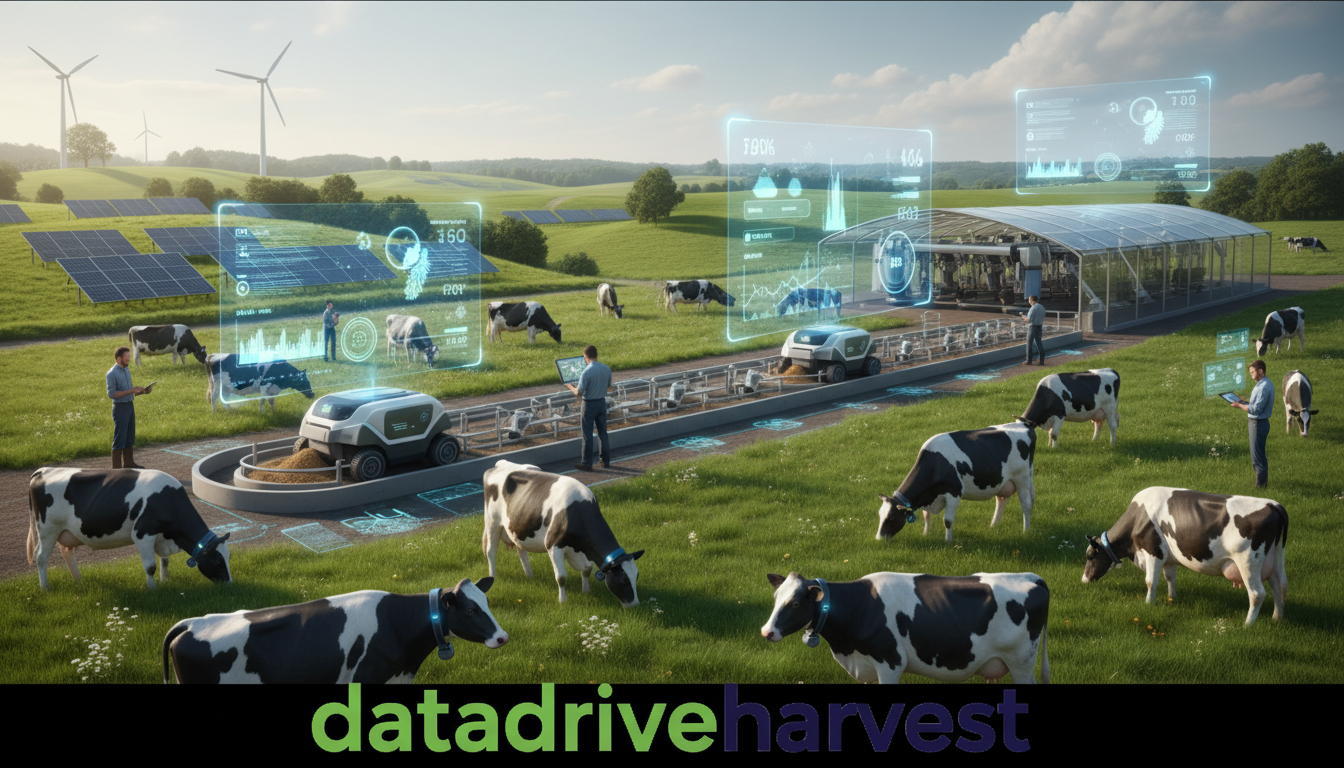
Table of Contents
Introduction
Digital Technologies are part of the global livestock industry is undergoing a profound transformation driven by artificial intelligence and digital technologies. As the world population grows and the demand for meat, milk, and other animal products continues to rise, farmers are under increasing pressure to produce more food while maintaining sustainability and animal welfare. Digital innovations such as artificial intelligence, machine learning, Internet of Things sensors, robotics, and data analytics are helping livestock farmers meet these challenges.
Artificial intelligence is reshaping traditional livestock farming by enabling data-driven decision making, real-time monitoring, and predictive management systems. These technologies allow farmers to track animal health, optimize feeding strategies, and improve overall farm efficiency. As a result, modern livestock farming is becoming more productive, sustainable, and technologically advanced.
This article explores how artificial intelligence and digital technologies are revolutionizing livestock farming, the key technologies involved, the benefits for farmers and animals, and how these innovations could shape the future of agriculture.
The Rise of Digital Technologies , Artificial Intelligence in Livestock Farming
Artificial intelligence refers to computer systems that can analyze data, identify patterns, and make intelligent decisions with minimal human intervention. In livestock farming, AI systems analyze large volumes of data collected from sensors, cameras, and farm management platforms to help farmers make better operational decisions.
AI-powered livestock systems can monitor animal behavior, predict disease outbreaks, and optimize feeding schedules. These technologies are rapidly becoming an essential part of precision livestock farming, a modern approach that uses data and technology to manage animals individually rather than treating the entire herd as a single unit.
Digital Technologies are an example of how Artificial Intelligence where the , wearable sensors attached to cattle or poultry can monitor vital indicators such as heart rate, body temperature, and activity levels. If the system detects unusual patterns, it can alert farmers or veterinarians immediately, allowing them to intervene before the problem becomes severe.
This shift from reactive to proactive livestock management is one of the most significant advantages of artificial intelligence in agriculture.
Key Digital Technologies Transforming Livestock Farming
Internet of Things and Smart Sensors
The Internet of Things plays a crucial role in modern livestock farming. IoT refers to a network of connected devices that collect and exchange data in real time.
In livestock farms Digital Technologies , sensors can monitor animal movement and activity, body temperature and heart rate, feeding patterns, and environmental conditions such as temperature and humidity.
These smart sensors continuously collect data from animals and send it to cloud-based systems where artificial intelligence algorithms analyze it. This allows farmers to monitor livestock remotely and detect health issues early.
For example, if a dairy cow stops eating or shows reduced movement, the system may identify this as a potential sign of illness and notify the farmer immediately.
𝐀𝐥𝐬𝐨 𝐑𝐞𝐚𝐝 : https://www.datadriveharvest.com/2026/03/05/artificial-insemination/
AI-Powered Animal Health Monitoring with Digital Technologies
One of the most valuable applications of artificial intelligence in livestock farming is health monitoring. Traditionally, farmers relied on visual observation to identify sick animals. However, diseases often spread before symptoms become obvious.
Artificial intelligence technologies can detect subtle behavioral or physiological changes that indicate disease at an early stage. Continuous monitoring systems can track feeding behavior, rumination patterns, activity levels, and body temperature.
These indicators allow AI systems to identify potential health problems before visible symptoms appear.
Early disease detection reduces mortality rates, lowers veterinary costs, and prevents large-scale outbreaks that could threaten entire herds.
Precision Feeding and Nutrition Management
Feed is one of the largest costs in livestock production, accounting for a significant portion of farm expenses. Artificial intelligence powered feeding systems help farmers optimize feed usage by analyzing animal growth, nutritional requirements, and production goals.
Using advanced analytics, farmers can design customized feed rations for individual animals or groups within the herd. This ensures animals receive the precise nutrients they need without wasting feed resources.
Precision feeding systems can also automatically adjust feeding schedules based on real-time data. For example, dairy cows producing more milk may receive higher energy feed, young animals may receive specialized nutrition for growth, and animals showing signs of illness may receive modified diets.
This targeted feeding approach improves productivity while reducing costs and environmental waste.
Computer Vision and Behavior Monitoring
Computer vision is another emerging technology transforming livestock management. Cameras installed in barns or pastures can monitor animal movement, posture, and behavior.
Using image recognition technology, these systems can identify individual animals, detect abnormal behavior, monitor feeding activity, and track herd movement.
For example, computer vision systems can identify signs of stress, lameness, or aggression among animals. Farmers can then adjust housing conditions or treatment plans accordingly.
Behavior monitoring also helps farmers improve animal welfare, which is becoming increasingly important for consumers and regulatory authorities.
Automated Milking and Robotics
Automation and robotics are becoming increasingly common in dairy farming. Robotic milking systems allow cows to be milked automatically without direct human involvement.
These robotic systems use sensors and intelligent algorithms to identify each cow, clean the udder, attach milking equipment, and monitor milk quality and production levels.
This technology reduces labor requirements while improving efficiency and animal comfort. Automated milking systems also collect valuable data that can be analyzed to improve herd management.
Precision Livestock Farming: Digital Technologies A New Era of Smart Agriculture
Precision livestock farming represents the integration of artificial intelligence, sensors, and data analytics into livestock management.
Unlike traditional farming methods, precision livestock farming focuses on individual animal monitoring rather than herd-level management. This allows farmers to tailor care, feeding, and treatment to each animal’s needs.
Precision livestock systems offer several advantages including early detection of diseases, improved animal welfare, optimized feed utilization, reduced environmental impact, and higher productivity and profitability.
By continuously collecting and analyzing data, these systems provide farmers with valuable insights that improve farm management.
Environmental Sustainability and Climate Impact with Digital Technologies
Sustainability is one of the biggest challenges facing modern agriculture. Livestock production contributes to greenhouse gas emissions, water consumption, and land use.
Artificial intelligence and digital technologies are helping farmers reduce the environmental footprint of livestock farming.
For example, intelligent systems can optimize feed efficiency, which reduces methane emissions from cattle. Digital tools also help farmers manage waste more effectively and reduce energy consumption.
Smart environmental control systems can regulate temperature, humidity, and ventilation in livestock housing. Maintaining optimal conditions improves animal health while reducing energy usage.
These technologies are helping farmers produce more food with fewer resources, making livestock farming more sustainable.
Benefits of Artificial Intelligence and Digital Technologies in Livestock Farming
Improved Animal Health and Welfare
Continuous monitoring allows farmers to detect illnesses earlier and provide faster treatment. This leads to healthier animals and reduced mortality rates.
Increased Productivity
Data-driven insights help farmers optimize feeding, breeding, and overall farm management, resulting in higher milk production, better meat quality, and improved reproductive performance.
Reduced Costs
Automation and data-driven management reduce labor costs, veterinary expenses, and feed waste.
Better Traceability and Food Safety
Digital livestock systems can record detailed data about animal health, feed, and movement. This improves transparency and traceability throughout the food supply chain.
Consumers increasingly demand information about how their food is produced, and digital technologies make this possible.
Challenges of Implementing Digital Technologies , Artificial Intelligence in Livestock Farming
Despite the benefits, several challenges remain.
High Initial Investment
Artificial intelligence systems, sensors, and automated equipment can be expensive, especially for small-scale farmers.
Data Privacy and Security
Digital livestock systems collect large amounts of data, raising concerns about data ownership and security.
Technical Skills
Farmers may require training to use advanced digital technologies effectively.
Connectivity Limitations
Many rural areas still lack reliable internet connectivity, which is necessary for cloud-based digital systems.
Overcoming these challenges will be essential for widespread adoption of artificial intelligence in agriculture.
𝐉𝐨𝐢𝐧 𝐎𝐮𝐫 𝐖𝐡𝐚𝐭𝐬𝐀𝐩𝐩 𝐆𝐫𝐨𝐮𝐩 𝐟𝐨𝐫 𝐦𝐨𝐫𝐞 𝐮𝐩𝐝𝐚𝐭𝐞𝐬 : https://chat.whatsapp.com/HT6ebp6IWfcKsT9nwXhkXn?mode=hqrt2
The Future of Artificial Intelligence in Livestock Farming
The future of livestock farming will likely involve fully integrated digital ecosystems where different technologies work together seamlessly.
Sensors, drones, artificial intelligence software, and farm management platforms will share data in real time, providing farmers with a comprehensive view of their operations.
Future innovations may include autonomous farm robots, AI-driven breeding programs, advanced disease prediction models, and blockchain-based livestock traceability systems.
These technologies will continue to improve efficiency, sustainability, and animal welfare.
Opportunities for Africa and Developing Regions
For Africa and other developing regions, artificial intelligence powered livestock farming presents significant opportunities.
Livestock farming is a major economic activity across many African countries including Zimbabwe, Kenya, and Ethiopia. However, many farmers still rely on traditional farming methods.
By adopting digital livestock technologies, African farmers could improve animal productivity, reduce disease outbreaks, increase income and food security, and strengthen agricultural supply chains.
Mobile-based livestock monitoring tools and affordable sensor technologies could make advanced farming tools accessible even to small-scale farmers.
Conclusion
Artificial intelligence and digital technologies are transforming livestock farming into a more efficient, sustainable, and data-driven industry. Through innovations such as smart sensors, computer vision, predictive analytics, and robotic automation, farmers can monitor animal health, optimize feeding systems, and improve overall farm productivity.
Precision livestock farming represents the future of animal agriculture, where every animal can be monitored and managed individually using advanced technologies.
Although challenges such as cost and technical expertise remain, the long-term benefits of artificial intelligence in livestock farming are undeniable. As these technologies continue to evolve, they will play a crucial role in ensuring global food security while promoting sustainable agricultural practices.
The integration of artificial intelligence, sensors, and digital platforms is not just improving livestock farming but redefining the future of agriculture worldwide.
𝐀𝐥𝐬𝐨 𝐑𝐞𝐚𝐝 : https://www.datadriveharvest.com/2026/02/24/digital-twins-in-african/