Table of Contents
How Smart Technology Helps Farmers Grow Food While Healing the Soil
The Problem with Farming Today
Farming in Southern Africa is facing big challenges. The soil is tired. The rain is not reliable. And farmers need to grow enough food for families and communities.
For many years, farmers focused only on growing as much as possible. Sometimes this hurt the soil. The old way takes nutrients out of the ground and does not put them back. Over time, the land becomes weak. Farmers then need more fertilizer to grow the same amount of food.
But there is a better way. It is called farming that fixes the land. This means farming in a way that makes the soil healthier over time, not weaker. And new technology like AI is helping farmers do this more easily.
This article explains farming that fixes the land in simple words. No hard technical terms. Just useful information for farmers, students, and anyone who cares about where their food comes from in Southern Africa.
What is Farming That Fixes the Land Anyway
Farming that fixes the land does the opposite of traditional farming. It aims to make the soil healthier every year. Healthier soil grows better crops. It also holds more water. It captures carbon from the air, which helps fight climate change.
Here are the main ideas of farming that fixes the land.
First, farmers disturb the soil as little as possible. That means less plowing. When you plow too much, the soil loses its structure and can wash away.
Second, farmers keep the soil covered all year. They plant cover crops between growing seasons. This protects the soil from wind and rain.
Third, farmers plant different types of crops each season. This is called crop rotation. It keeps the soil from getting tired of the same plant.
Fourth, farmers slowly reduce the use of chemical fertilizers and pesticides over time. They let nature do more of the work.
When farmers use these methods, the soil gets better. It holds more water. It has more organic matter, which is the good stuff in soil that helps plants grow. It also has more carbon and nutrients.
This is what farming that fixes the land looks like in practice. It is not complicated. But it requires a different way of thinking.
𝐀𝐥𝐬𝐨 𝐑𝐞𝐚𝐝 : https://www.datadriveharvest.com/2026/03/17/variable-rate-application/
Why This Matters for Southern Africa
Farming is a big part of the climate change problem. Agriculture creates about one quarter of all greenhouse gas emissions worldwide. That is a lot.
At the same time, the world population is growing. By 2058, there will be about 10 billion people on Earth. All of those people need to eat. Southern Africa has its own population pressures and food security challenges.
So farmers have a difficult job. They need to grow more food. But they also need to pollute less and take better care of the land.
Farming that fixes the land can help solve this problem. If farmers use these methods on a large scale, it could make a real difference in fighting climate change. It would also make our food system stronger and more reliable.
There is also good news for farmers who switch to farming that fixes the land. Some studies show that farmers can increase their profits over time. So healing the soil is good for the planet and good for the farmer’s wallet.
How AI and Digital Tools Help Farmers Fix the Land
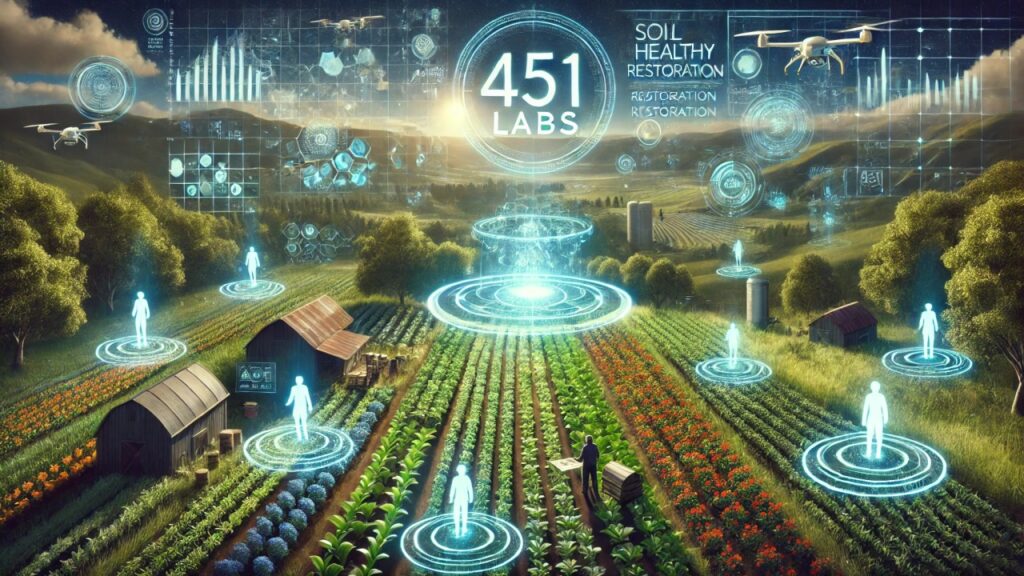
This is where technology comes in. Farmers cannot do all of this alone. They need tools to help them make good decisions. That is what AI and digital agriculture provide.
AI in agriculture is growing fast around the world, and Southern Africa can benefit greatly from these tools. When combined with farming that fixes the land, AI becomes even more powerful.
So what do these tools actually do for farmers in places like South Africa, Zimbabwe, Zambia, Mozambique, and Malawi?
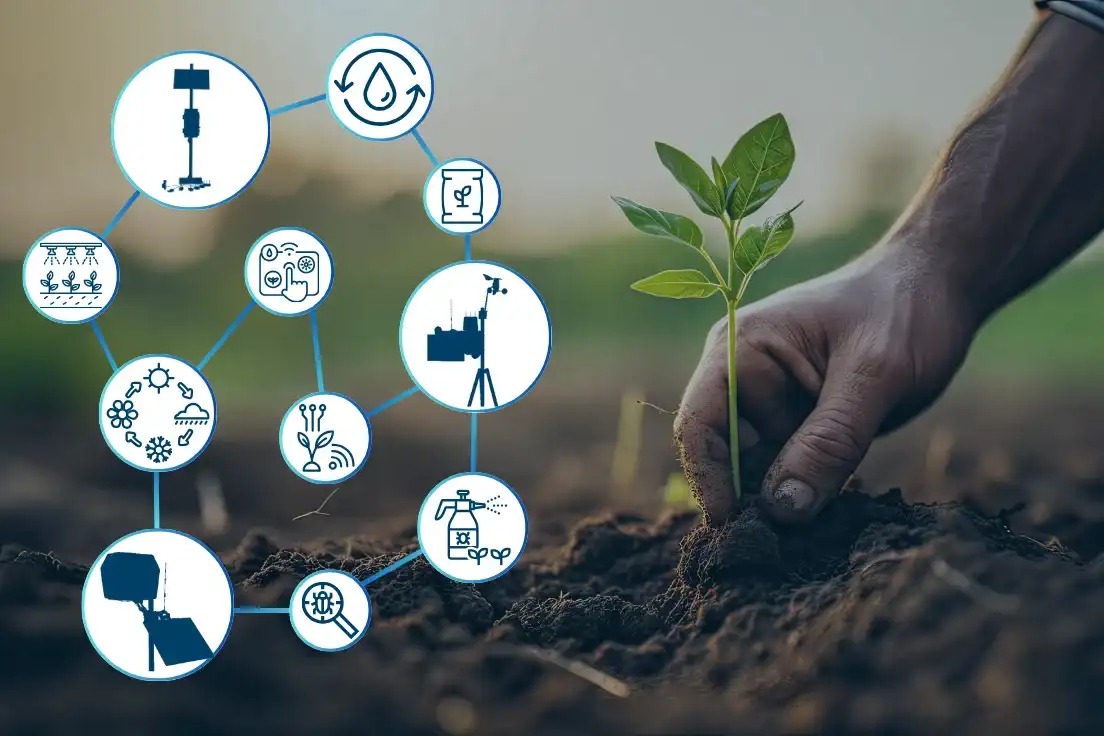
First, there are advanced monitoring systems. These use satellites, drones, and soil maps to watch over the fields. In a region where droughts and floods are common, knowing what is happening on your land in real time is very valuable. Farmers can see which parts of their fields need water and which do not. This saves water, which is precious in dry areas. This is a key part of farming that fixes the land because water management is essential for soil health.
Second, these systems can detect problems early. If a disease or pest is starting to spread, the technology can alert the farmer before it becomes a big problem. The farmer can then treat only the affected area instead of the whole field. This saves money and reduces the use of chemicals. Using fewer chemicals is a core principle of farming that fixes the land.
Third, AI can help farmers predict the future. By looking at historical data, AI can forecast what will happen with weather, crop growth, and market prices. For a farmer in Southern Africa who depends on seasonal rains, knowing when the rains will come and how much to expect is extremely helpful. This allows farmers to plan their work around nature, not against it.
These technologies help farmers practice farming that fixes the land more effectively. They turn good intentions into measurable results.
The Real Struggles Farmers Face
Switching to farming that fixes the land is not always easy for farmers in Southern Africa. There are real challenges.
First, many farmers work on small plots of land. They do not have big farms with expensive equipment. They need solutions that work on a small scale and do not cost too much money. Farming that fixes the land must be affordable for everyone, not just large commercial farms.
Second, access to technology is limited. Many rural areas in Southern Africa do not have reliable internet. Farmers cannot use satellite data or AI tools if they cannot get online. Mobile networks are improving, but there is still a long way to go. Without internet, farming that fixes the land relies only on traditional knowledge.
Third, farmers need training. Farming that fixes the land is different from what many farmers learned from their parents and grandparents. It takes time to learn new methods. Extension services in many Southern African countries are underfunded and cannot reach all farmers.
Fourth, it takes time for the soil to get healthier. The benefits do not happen overnight. A farmer might see lower yields in the first year or two before the soil improves. That can be hard for a farmer who needs to feed their family every season. Farming that fixes the land requires patience.
Fifth, climate change makes everything harder. Southern Africa is already experiencing more frequent droughts and unpredictable weather. Farmers need tools that help them adapt to these conditions. Farming that fixes the land can help, but only if farmers have the support they need.
This is where government, NGOs, and private companies need to step in. Farmers cannot make these changes alone. Farming that fixes the land requires a team effort.
What Farmers Need to Succeed
Here are several ways that governments, organizations, and businesses can support farmers in Southern Africa who want to practice farming that fixes the land.
First, create incentive programs. These can help cover the costs of switching to farming that fixes the land. If a farmer gets some financial help for the first few seasons, it is easier to make the change. This could be in the form of seeds, tools, or small loans.
Second, invest in mobile technology. Many farmers in Southern Africa have mobile phones but not computers. AI tools and advice can be delivered through simple SMS messages or basic smartphone apps. This makes farming that fixes the land accessible to more people.
Third, strengthen extension services. Farmers need access to experts who can teach them about farming that fixes the land. Governments should invest in training more agricultural extension officers and sending them to rural areas.
Fourth, build farmer-to-farmer networks. Farmers learn best from other farmers. Creating groups where farmers can share what works and what does not is very effective. These networks can be local or connected through mobile phones. Word of mouth spreads knowledge about farming that fixes the land faster than any brochure.
Fifth, develop early warning systems. Using AI and satellite data, organizations can warn farmers about coming droughts, floods, or pest outbreaks. This gives farmers time to protect their crops. Protecting crops is a big part of farming that fixes the land.
Sixth, support local research. The best methods for farming that fixes the land in Southern Africa are not the same as those for Europe or North America. Local universities and agricultural research stations need funding to study what works in local conditions.
Success Stories from the Region
Farming that fixes the land is already being used successfully in different parts of Southern Africa. These examples show that it can work.
In Zimbabwe, some farmers have returned to traditional practices like planting nitrogen-fixing trees alongside their crops. These trees make the soil richer without chemical fertilizers. When combined with simple weather data from mobile phones, these farmers have improved their harvests even in dry years. This is farming that fixes the land using both old wisdom and new tools.
In Malawi, farmers are using conservation agriculture methods. They disturb the soil as little as possible, keep the ground covered with crop residues, and rotate their crops. Studies have shown that these methods increase yields while reducing the need for expensive fertilizer. This is a perfect example of farming that fixes the land on a small scale.
In South Africa, some commercial farmers are using precision agriculture tools. They use GPS and sensors to apply water and fertilizer only where needed. This has reduced their input costs and improved their soil health. Even large farms are discovering the value of farming that fixes the land.
In Zambia, farmer training programs have taught thousands of small-scale farmers how to use cover crops and minimum tillage. These farmers report better soil moisture and more reliable harvests. They have become champions of farming that fixes the land in their communities.
In Mozambique, NGOs are helping farmers access satellite weather data through simple mobile phone apps. Farmers can now decide when to plant based on reliable forecasts instead of guessing. This makes farming that fixes the land more predictable and less risky.
These examples prove that farming that fixes the land works in Southern Africa. But these efforts need to be scaled up to reach many more farmers.
𝐉𝐨𝐢𝐧 𝐎𝐮𝐫 𝐖𝐡𝐚𝐭𝐬𝐀𝐩𝐩 𝐆𝐫𝐨𝐮𝐩 𝐟𝐨𝐫 𝐦𝐨𝐫𝐞 𝐔𝐩𝐝𝐚𝐭𝐞𝐬
Jobs That Are Growing in This Field
Farming that fixes the land creates new job opportunities for people in Southern Africa. Here are some roles that are growing in importance.
Precision agriculture specialists help farmers use satellites, drones, and sensors to manage their fields more efficiently. This is a growing field in South Africa and other countries with larger commercial farms. These specialists are essential for modern farming that fixes the land.
Agricultural data analysts look at farm data to find patterns and make recommendations. These jobs can often be done remotely from cities like Johannesburg, Cape Town, or Harare. They help farmers practice farming that fixes the land without being in the field themselves.
Mobile app developers are needed to create simple, easy-to-use apps that deliver farming advice to small-scale farmers. These apps must work on basic smartphones and use little data. Good apps make farming that fixes the land accessible to everyone.
Sustainability advisors help farmers transition to farming that fixes the land and measure their progress. NGOs and government agencies need people with these skills. They act as bridges between technology and traditional farming.
Climate smart agriculture extension officers are needed to train farmers in the field. This is a good career path for people who come from farming communities and want to help their neighbors. They are the front line of spreading farming that fixes the land.
Carbon credit specialists help farmers measure the carbon they capture in their soil. There is growing interest in carbon markets in Southern Africa, and this creates new opportunities. Farmers who practice farming that fixes the land can earn extra money from carbon credits.
Drone operators are needed to fly over fields and collect data. This is a technical job that requires training, but it pays well. Drones give farmers a bird’s eye view of their land, which is very helpful for farming that fixes the land.
Many of these jobs do not require a university degree. Technical training and practical experience are often enough to get started. Young people in Southern Africa should consider these careers.
A Simple Summary
Here is everything you need to remember.
Farming that fixes the land is a way of farming that makes soil healthier over time. It works well in Southern Africa, where soil degradation and unreliable rains are major problems.
AI and digital tools help farmers practice farming that fixes the land. These tools include satellite monitoring, pest detection systems, and weather forecasting.
Farmers in Southern Africa face challenges including small farm sizes, limited internet access, lack of training, and climate change.
Help can come from governments, NGOs, and private companies. Incentive programs, mobile technology, extension services, farmer networks, early warning systems, and local research are all needed.
Real examples from Zimbabwe, Malawi, South Africa, Zambia, and Mozambique show that farming that fixes the land works in Southern Africa.
New jobs are being created in precision agriculture, data analysis, mobile app development, sustainability advising, extension services, carbon credits, and drone operations.
Farming in Southern Africa will always be hard work. But with farming that fixes the land and the right tools, farmers can feed their communities and take care of the land for future generations. That is good for everyone. The land gives us food. Now it is time to give back to the land.