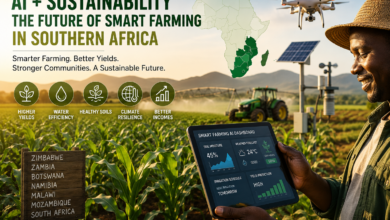
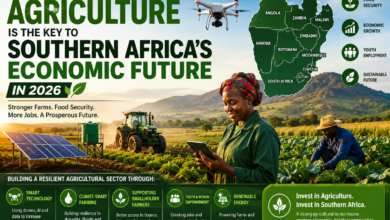
Discover how AI adoption in African agriculture is transforming farming through precision agriculture, smart technology, and digital innovation. Learn how African farmers are using AI to improve yields, fight climate change, and boost food security.


Table of Contents
Africa’s Agricultural Future Is Being Powered by AI adoption.
Across Africa, agriculture remains the backbone of the economy.
Millions of families depend on farming not only for income but also for survival. Yet despite agriculture employing a large share of Africa’s workforce, many farmers still face major challenges including climate change, soil degradation, pests, unpredictable rainfall, and limited access to modern farming technologies.
Now, artificial intelligence is beginning to transform the continent’s farming sector in ways that were almost unimaginable a decade ago.
From AI-powered soil testing and weather forecasting to smart irrigation systems and crop disease detection, African agriculture is entering a new digital era driven by data, innovation, and precision farming technologies.
What once looked like futuristic technology is now becoming a real solution for smallholder farmers across the continent.
Why AI adoption Is Becoming Essential for African Agriculture
Africa’s population is projected to grow rapidly in the coming decades, increasing pressure on food production systems and agricultural resources. At the same time, climate-related disruptions continue threatening crop yields and food security.
Traditional farming methods alone may no longer be enough to meet future food demand.
Artificial intelligence is helping farmers make smarter and faster decisions using real-time agricultural data and predictive analytics.
AI in agriculture combines advanced algorithms with information gathered from:
- Soil sensors
- Satellite imagery
- Weather systems
- Mobile applications
- IoT farming devices
- Crop monitoring technologies
These systems help farmers improve productivity, reduce waste, optimize fertilizer use, and minimize risks associated with climate variability.
For many African farmers, AI is no longer a luxury—it is becoming a necessity.
Smallholder Farmers Are Driving Africa’s AI Farming Revolution
One of the most important aspects of Africa’s AI agriculture movement is its focus on smallholder farmers.
Smallholder farmers produce most of Africa’s food supply, yet many still rely on traditional farming methods and limited agricultural advisory services.
Companies like UjuziKilimo are helping bridge this gap by developing affordable AI-powered farming tools specifically designed for local farming communities.
One of their key innovations is SoilPal, a portable soil testing device that can analyze soil nutrients within minutes and provide real-time agronomy recommendations.
This shift toward precision farming is helping farmers move away from guesswork and toward knowledge-based agriculture.
Precision Agriculture Is Changing Farming Across Africa
Precision agriculture is becoming one of the fastest-growing trends in African farming.
Instead of applying fertilizer, pesticides, or irrigation evenly across entire farms, AI systems allow farmers to make targeted decisions based on real-time conditions.
AI-powered farming technologies can help farmers:
- Detect crop diseases early
- Predict pest outbreaks
- Monitor crop health
- Track soil conditions
- Optimize irrigation schedules
- Reduce unnecessary fertilizer use
These technologies not only increase productivity but also help reduce farming costs and environmental damage.
For many farmers, this translates directly into higher incomes and better food security.
𝐀𝐥𝐬𝐨 𝐑𝐞𝐚𝐝 : https://www.datadriveharvest.com/2026/04/27/agricultural-intelligence/
AI Is Helping Farmers Adapt to Climate Change
Climate change remains one of the greatest threats to African agriculture.
Droughts, floods, erratic weather patterns, and soil degradation continue affecting farming communities across the continent.
Artificial intelligence is helping farmers adapt by providing:
- Hyper-local weather forecasts
- Climate risk predictions
- Crop recommendations
- Water management insights
- Real-time monitoring systems
These digital tools are especially valuable in rural communities where access to traditional agricultural extension services is limited.
Mobile Phones Are Accelerating AI Adoption
One reason AI adoption is growing rapidly in Africa is the widespread use of mobile technology.
Even in remote rural communities, mobile phones are becoming powerful agricultural tools.
Many AI farming solutions are now delivered through:
- Mobile applications
- WhatsApp systems
- SMS advisory platforms
- Digital extension services
This allows farmers to access weather updates, farming advice, pest alerts, and market information without needing expensive computers or advanced technical skills.
For Africa, mobile technology may become the key bridge connecting millions of farmers to the future of digital agriculture.
Africa’s AgriTech Startup Ecosystem Is Expanding Rapidly
AI adoption is also fueling the rise of African agri-tech startups.
Across countries such as Kenya, Nigeria, Rwanda, Ghana, and South Africa, entrepreneurs are building innovative digital farming solutions tailored specifically for African agricultural conditions.
These startups are developing technologies connected to:
- Smart irrigation
- AI crop diagnostics
- Livestock monitoring
- Soil intelligence systems
- Agricultural financing
- Farm management platforms
This growth is helping position Africa as one of the world’s emerging agri-tech innovation hubs.
Why Agricultural Data Is Becoming So Valuable
Modern farming increasingly depends on data.
AI systems rely on data connected to:
- Soil fertility
- Rainfall patterns
- Pest outbreaks
- Crop diseases
- Market trends
- Farm productivity
By analyzing this information, AI technologies can generate recommendations that help farmers maximize productivity while reducing waste.
Data-driven farming is becoming essential for sustainable agriculture and long-term food security.
The Biggest Challenges Slowing AI Adoption
Despite the excitement surrounding AI agriculture, major challenges still remain.
Some of the biggest barriers include:
- Poor internet connectivity
- Limited electricity access
- High technology costs
- Low digital literacy
- Inadequate infrastructure
- Language barriers
Experts believe Africa will need greater investment in digital infrastructure, rural internet access, and farmer training programmes to fully unlock AI’s agricultural potential.
Young Africans Are Leading Agricultural Innovation
Africa’s young population is playing a major role in digital agriculture innovation through AI adoption.
Young entrepreneurs, software developers, engineers, and data scientists are increasingly building AI tools designed specifically for local agricultural challenges.
Many are combining:
- Artificial intelligence
- Internet of Things (IoT) systems
- Cloud computing
- Robotics
- Data analytics
- Mobile technologies
to create affordable and scalable farming solutions.
This new generation of innovators is not only modernizing agriculture but also creating new opportunities in Africa’s digital economy.
𝐉𝐨𝐢𝐧 𝐎𝐮𝐫 𝐖𝐡𝐚𝐭𝐬𝐀𝐩𝐩 𝐆𝐫𝐨𝐮𝐩 𝐟𝐨𝐫 𝐌𝐨𝐫𝐞 𝐔𝐩𝐝𝐚𝐭𝐞𝐬
Why AI Agriculture Could Transform Africa’s Economy
Agriculture remains one of Africa’s largest economic sectors.
As climate pressures intensify and food demand rises, AI-powered agriculture could become critical for improving food production, increasing farmer incomes, and strengthening food security.
Experts believe smart farming technologies could help Africa:
- Improve crop productivity
- Reduce food waste
- Strengthen climate resilience
- Modernize farming systems
- Create digital agriculture opportunities
- Support sustainable farming practices
The long-term impact could reshape Africa’s agricultural future completely.
Final Thoughts
AI adoption is opening a new chapter for African agriculture.
From smart soil testing and climate forecasting to AI-powered crop management and digital farming platforms, technology is helping farmers make better decisions while improving sustainability and productivity.
Although infrastructure and accessibility challenges still exist, Africa’s growing agri-tech ecosystem shows enormous promise.
As governments, startups, investors, and innovators continue investing in smart agriculture, the continent could become a global leader in precision farming and agricultural innovation.
For millions of African farmers, AI may represent more than technology—it may represent the future of food security, resilience, and economic growth.