Discover how John Deere is using artificial intelligence, autonomous tractors, precision agriculture, and smart farming technologies to transform global agriculture and inspire the future of sustainable farming 2026.

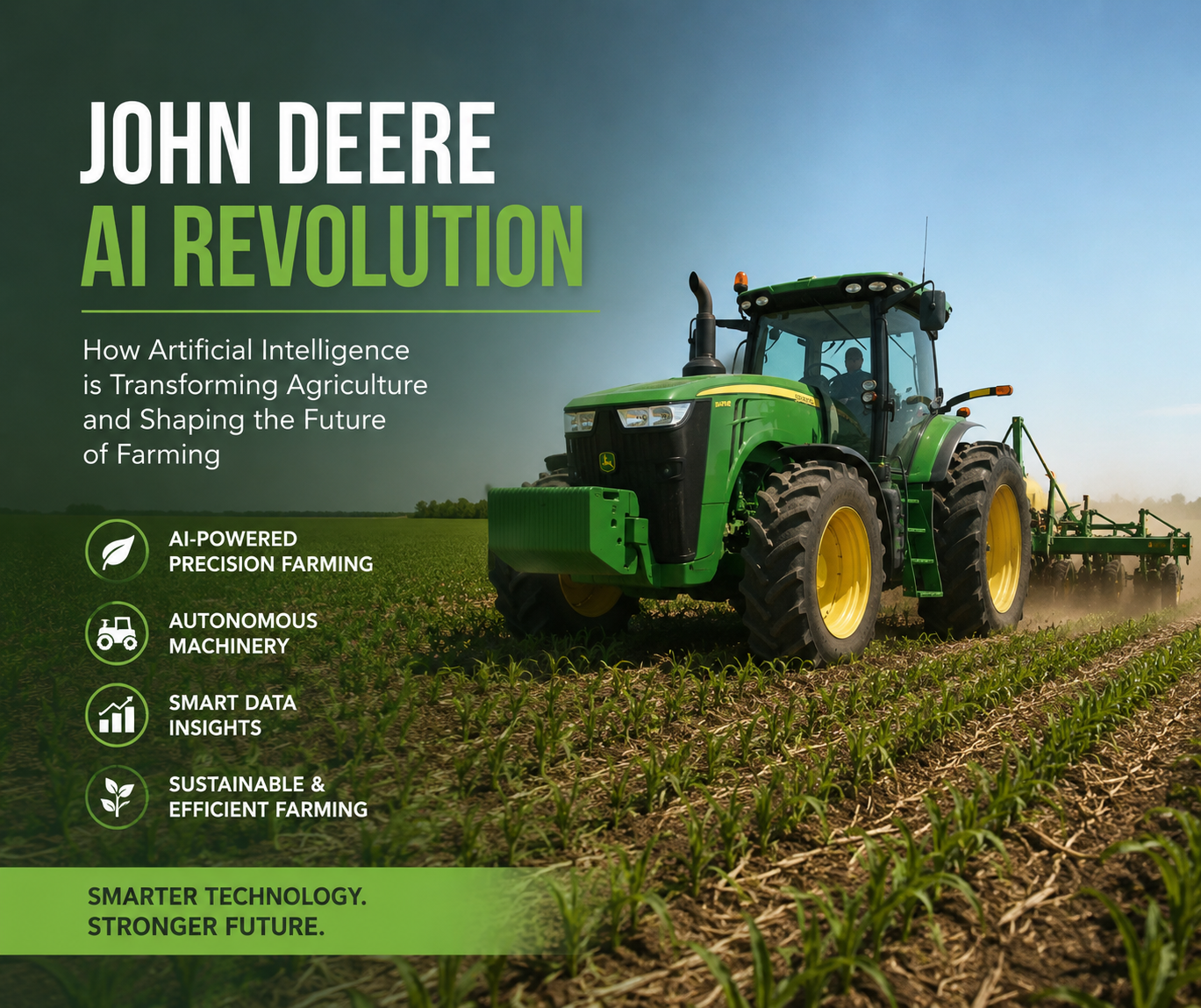
Table of Contents
John Deere’s AI Revolution: How Artificial Intelligence Is Transforming Global Agriculture and Shaping the Future of Farming
Artificial intelligence is no longer a futuristic concept—it is already changing the way farmers plant, spray, monitor, and harvest crops. Few companies demonstrate this transformation better than John Deere, one of the world’s leading agricultural equipment manufacturers.
For nearly two centuries, John Deere has been known for producing reliable farming equipment. Today, the company is leading a new era of agriculture by integrating artificial intelligence, machine learning, robotics, computer vision, and precision farming technologies into its machinery and digital platforms. John Deere & Company’s AI strategy highlights how these technologies have become central to its global competitiveness and international expansion.
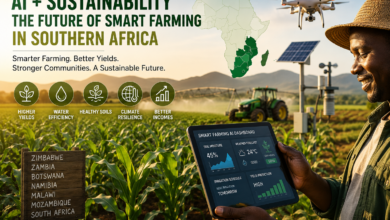
For farmers across Southern Africa, John Deere’s innovation journey provides a glimpse into how technology can improve productivity, reduce production costs, and make farming more sustainable.
From Farm Equipment Manufacturer to AgTech Leader
Founded in 1837, John Deere has evolved from manufacturing steel ploughs to becoming one of the world’s largest producers of agricultural machinery.
Today, the company operates in more than 30 countries, serves customers in over 160 countries, and continues investing heavily in artificial intelligence and digital agriculture. Its Smart Industrial Strategy combines advanced technology with decades of engineering expertise to deliver smarter farming solutions.
Rather than simply building tractors, John Deere is building an intelligent farming ecosystem.
How Artificial Intelligence Is Powering John Deere’s Success
Artificial intelligence now sits at the centre of many of John Deere’s products and services.
The company uses AI to help farmers:
- Detect weeds automatically
- Optimise fertiliser application
- Improve crop monitoring
- Reduce fuel consumption
- Increase machinery efficiency
- Predict equipment maintenance needs
- Analyse farm data in real time
- Improve planting accuracy
These technologies help farmers make better decisions while reducing waste and increasing productivity.
Autonomous Tractors Are Changing Agriculture
One of John Deere’s biggest breakthroughs has been the development of autonomous farming equipment.
Using advanced cameras, GPS guidance, sensors, artificial intelligence, and machine learning, autonomous tractors can perform field operations with minimal human intervention.
The technology constantly analyses its surroundings, detects obstacles, and adjusts operations automatically, helping farmers work more efficiently while reducing labour demands.
As labour shortages become more common, autonomous machinery could become one of agriculture’s most valuable innovations.
𝐉𝐨𝐢𝐧 𝐎𝐮𝐫 𝐖𝐡𝐚𝐭𝐬𝐀𝐩𝐩 𝐆𝐫𝐨𝐮𝐩 𝐟𝐨𝐫 𝐌𝐨𝐫𝐞 𝐔𝐩𝐝𝐚𝐭𝐞𝐬
Precision Agriculture: Farming with Data
Modern farming increasingly relies on data rather than guesswork.
John Deere’s precision agriculture technologies collect information from fields, machinery, weather conditions, and crops to help farmers make informed decisions.
These systems can provide insights on:
- Soil conditions
- Plant health
- Crop growth
- Moisture levels
- Fertiliser requirements
- Harvest timing
- Machinery performance
Instead of treating every hectare the same, farmers can manage each section of a field according to its specific needs.
This improves yields while reducing unnecessary input costs.
See & Spray: Using AI to Reduce Chemical Use
One of John Deere’s most impressive AI innovations is See & Spray.
The system uses high-speed cameras and computer vision to identify weeds in real time. Artificial intelligence distinguishes weeds from crops and sprays herbicide only where it is needed.
This targeted approach reduces chemical use, lowers production costs, and supports more sustainable farming practices. According to the case study, millions of gallons of herbicide have been saved since the technology was introduced.
For farmers facing rising input costs, precision spraying offers both economic and environmental benefits.
𝐀𝐥𝐬𝐨 𝐑𝐞𝐚𝐝 : https://www.datadriveharvest.com/2026/06/15/agriculture-3/#
Connected Machines and Predictive Maintenance
John Deere has also embraced connected farming.
Thousands of machines send operational data to cloud-based systems, allowing farmers and dealers to monitor equipment performance remotely.
AI-powered tools can:
- Detect machine faults early
- Predict maintenance requirements
- Reduce unexpected breakdowns
- Improve equipment uptime
- Support remote diagnostics
This helps farmers avoid costly delays during critical planting and harvesting seasons.
AI and Sustainability Go Hand in Hand
Artificial intelligence is helping agriculture become more sustainable.
John Deere’s technologies contribute to sustainability by:
- Reducing herbicide use
- Improving fertiliser efficiency
- Conserving water
- Lowering fuel consumption
- Minimising soil disturbance
- Supporting regenerative farming
- Reducing greenhouse gas emissions through more efficient operations
As governments and consumers increasingly demand environmentally responsible food production, AI is becoming a valuable tool for sustainable agriculture.
What Southern Africa Can Learn from John Deere
Agriculture remains one of Southern Africa’s most important economic sectors.
However, farmers continue to face challenges such as:
- Climate change
- Drought
- Rising production costs
- Labour shortages
- Pest outbreaks
- Limited access to agricultural data
The technologies pioneered by John Deere demonstrate how artificial intelligence can help overcome many of these challenges.
Although large autonomous tractors may not yet be accessible to every farmer, similar innovations are increasingly appearing in:
- Mobile farming applications
- Drone technologies
- Smart irrigation systems
- AI-powered weather forecasting
- Satellite crop monitoring
- Precision fertiliser management
As digital agriculture expands across Africa, these technologies are expected to become more affordable and widely available.
John Deere’s Vision for the Future
John Deere continues investing in research, artificial intelligence, automation, and startup partnerships to accelerate innovation. Recent collaborations are exploring advanced sensing, analytics, AI-driven robotics, and digital crop intelligence to improve precision, productivity, and sustainability.
The company’s long-term vision is to create farms where intelligent machines can perform many routine tasks with greater precision while helping farmers maximise productivity and use resources more efficiently.
Why AI Will Shape the Future of Agriculture
Artificial intelligence is becoming one of the most important technologies in modern farming.
It enables farmers to:
- Produce more food
- Reduce operating costs
- Improve sustainability
- Make data-driven decisions
- Increase profitability
- Adapt to climate change
Companies like John Deere are proving that combining engineering excellence with AI can transform agriculture on a global scale.
Final Thoughts
John Deere’s journey from a traditional machinery manufacturer to a global leader in agricultural technology demonstrates the enormous potential of artificial intelligence in farming.
By integrating AI into tractors, sprayers, harvesters, connected machinery, and precision agriculture platforms, the company is helping farmers work smarter, increase productivity, and reduce environmental impact.
For Southern Africa, where agriculture plays a critical role in economic growth and food security, these innovations provide valuable inspiration. As access to digital tools, precision farming, and AI continues to grow, farmers across the region will be better equipped to build more resilient, productive, and sustainable agricultural systems.
The future of farming is no longer defined by horsepower alone—it is increasingly driven by data, automation, and artificial intelligence.
Disclaimer
DataDriveHarvest is an independent agricultural information platform that publishes educational content, research summaries, and technology insights for informational purposes only. This article is based on publicly available research and industry information. We are not affiliated with John Deere or Deere & Company.
Readers are encouraged to consult official John Deere resources and qualified agricultural professionals before making machinery investment or farm management decisions.